
 by
by The video game case lay abandoned on the floor in a miserable state. A concrete block pinned it down, while water leaking from a ruptured pipe had soaked the cover until it was warped beyond recognition. Jake knelt beside it, one knee on the ground, his machine gun gripped tightly in both hands. His eyes remained fixed on the battered case. Tilting his head slightly, he tried to make out the faded title. “…dern Warfare,” he murmured. The image of the masked soldier stirred a memory. He had seen that cover before—in the hands of his son, Liam. “It’s an awesome game, Dad. Hank bought it for me because I did well at school.” Hank. The man who had become Liam’s stepfather after the divorce. Jake’s ex-wife couldn’t live with a soldier anymore. She said she couldn’t build a family with a man who spent months overseas. She couldn’t bear the constant anxiety of wondering every evening whether he was still alive or…
Jake was pulled from his thoughts by Simon, one of the men in his squad, who motioned for him to keep moving through the ruins. They left what had once been a living room and entered a bathroom whose back wall had been completely blown away, opening onto a sun-drenched street in the heart of an Iraqi village.
Then the gunfire erupted.
“Take cover!” Sergeant Wilson shouted.
Crouching low, the squad sprinted across the street toward the house opposite. Once inside, the sergeant quickly counted heads to make sure everyone had made it. One man was missing. He looked back. Jake lay motionless where he had fallen, blood covering his face.
At that very moment, thousands of miles away, Liam was playing his favourite war game. “Boom, headshot!” he shouted with a grin, tearing off another bite of his chocolate bar.
Leaving the comfort of imagination

Jack Brussell: If I chose to open this article with this story, it was not to make players feel guilty or to suggest that we shouldn’t play war games. After all, games have depicted conflicts since the dawn of time. But when they portray modern warfare, I can’t help but imagine that a real soldier might actually be living through that simulation.
Unlike other games we are used to, which feature superheroes or knights, modern wargames offer neither historical distance nor a fantasy filter. They plunge us directly into the heart of our era and the real conflicts shaping it. By tearing us away from our cozy, reassuring imaginary worlds, they confront us with a complex reality, far from any simple binary of good versus evil. And even if this experience can be jarring, or even unsettling, it remains essential for the wargamers that we are.
Why Haywire ?
To promote our articles on social media, Critical Hit follows countless miniature gaming groups. The result? Meta’s algorithms now feed us an endless stream of wargaming content. It’s a great way to keep a finger on the pulse of the hobby, but above all, it helps us discover miniature games that might otherwise fly under our radar. That’s exactly how Haywire landed on my screen one day in February 2026.
What first caught my attention were its immersive visuals. Then it was the game’s modern setting that truly piqued my interest.
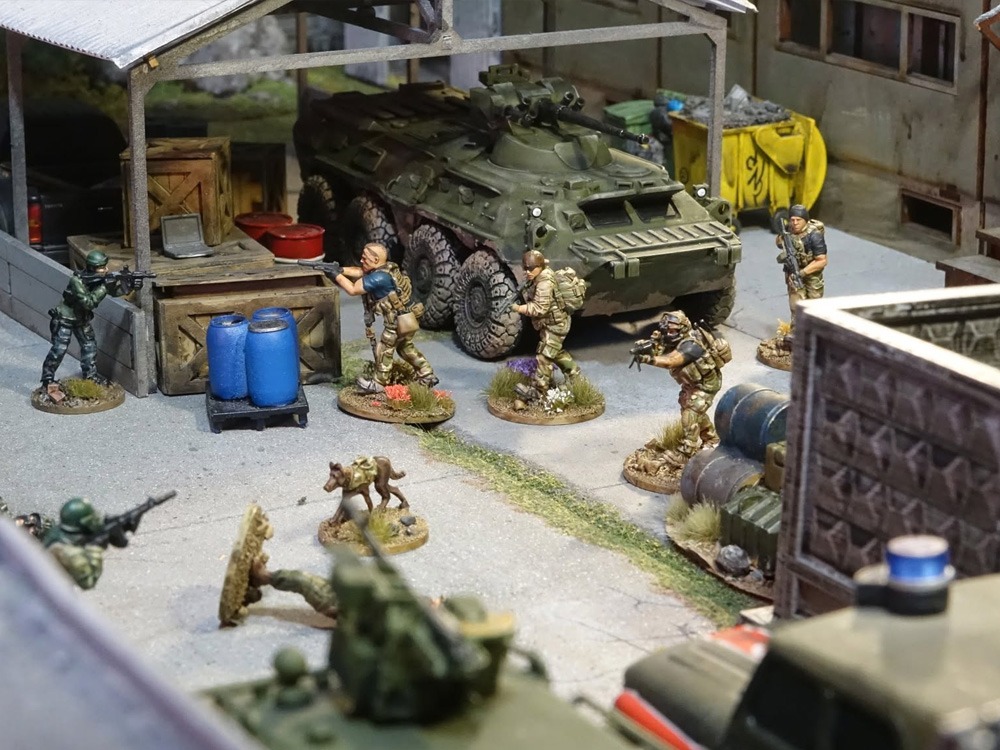
“You know… that’s actually quite rare,” I remember thinking. Science fiction and fantasy dominate the miniature gaming scene, while our own era is almost entirely absent. The closest thing we usually get is zombie games, which tend to lean more toward the post-apocalyptic than the contemporary.
But I wasn’t done being surprised.
As I dug deeper into Haywire, I discovered that it was a solo wargame. Even more surprising, its creator is French-speaking and just one Discord message away. That was an opportunity I simply couldn’t pass up. I wanted to understand how the person known as “The Solo Wargamer” came to create a game like Haywire.
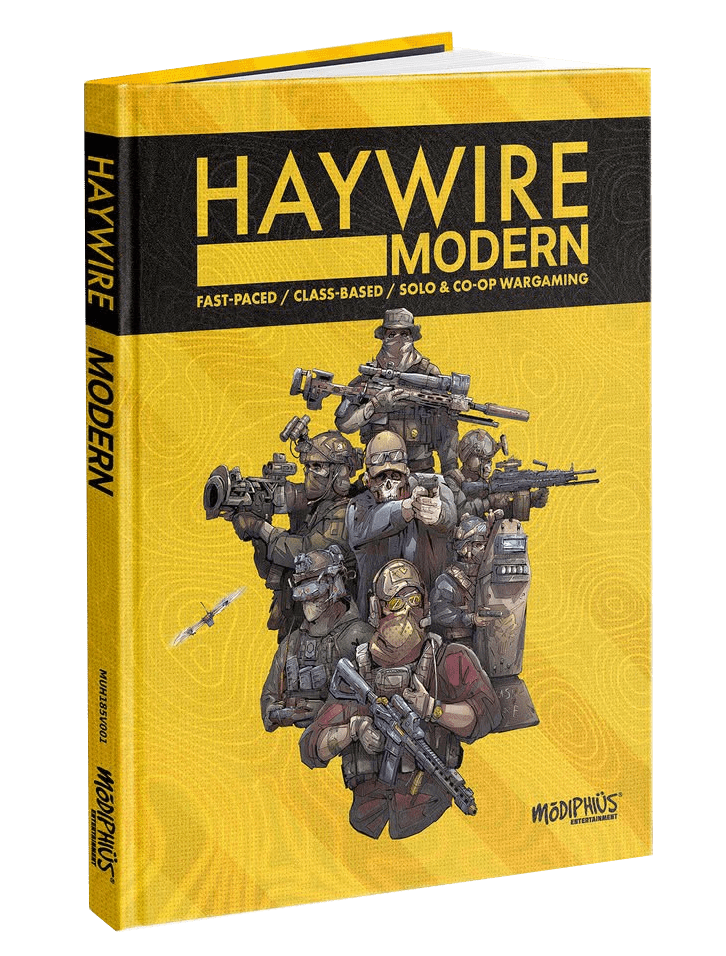
During our conversations, I also learned that Haywire was about to receive its third official edition, published for the first time by Modiphius Entertainment. The timing of the interview couldn’t have been better. Well… in theory. In practice, we had to wait several months for the V3 to be officially announced—and, perhaps even more challenging, for two busy dads to finally find time in their schedules.
In the end, what convinced me to dedicate an entire series of articles to Haywire wasn’t just its game mechanics or its visual style. It was, above all, the philosophy behind it. By choosing to portray a contemporary conflict through a solo wargame, it offers an approach that remains remarkably rare in the miniature gaming hobby.
It is precisely that uniqueness that convinced me Haywire deserved a closer look on Critical Hit. Over the coming weeks, Weptak and I will explore its setting, its mechanics, the creative decisions behind it, and what makes Haywire such a distinctive entry in the world of tabletop wargaming.


Support us via Maxi Reves ✨
Help us promote lesser-known miniature games and grow their communities. Order your miniatures from Maxi Rêves using the code MAXITC and be part of our mission!