
 by
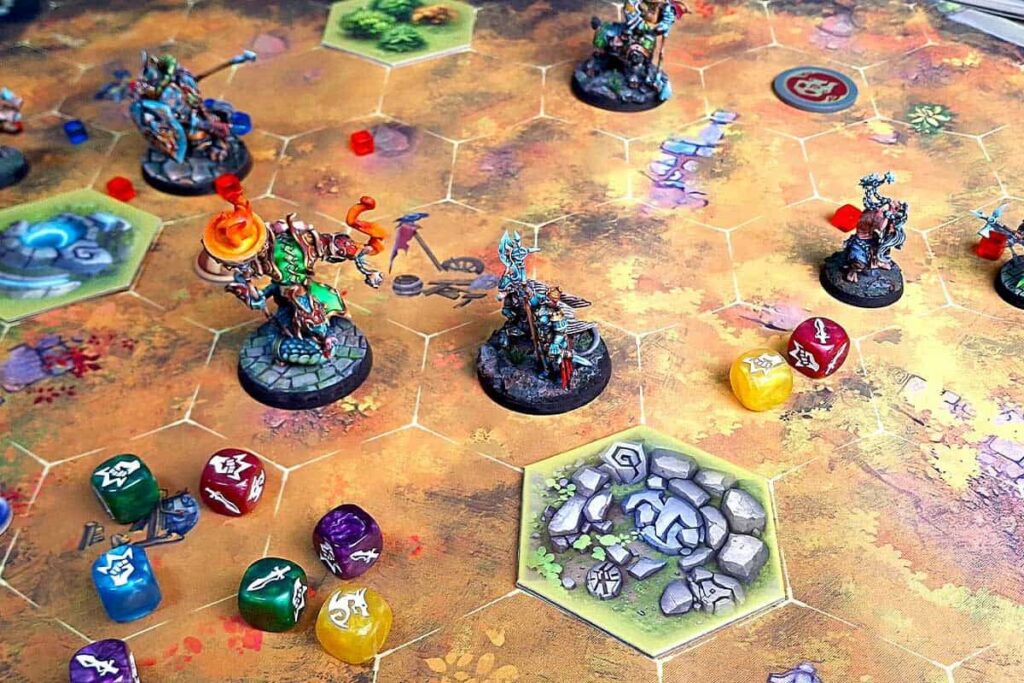
by Legends of Signum II: Warseer is a fantasy arena game that pits two Heroes against each other, with a deck of cards acting as the economic engine that fuels the clash through reinforcements and spells. Your Hero is the first to set foot on the battlefield, so you’ll need to manage your resources brilliantly to gradually summon your troops, take control of the hex-based territories and choke your opponent out all the way to victory.
This article is based on a copy of the game that Signum Games provided to us free of charge as part of a press relationship. This does not grant any oversight over our editorial content: Critical Hit retains full independence and our opinions remain free and objective.
Overview of Legends of Signum II: Warseer
Legends of Signum II: Warseer, or simply Warseer, is a fantasy arena game in which each player commands a Hero accompanied by a squad of soldiers. What sets Warseer apart is an economic dimension built into the core of its gameplay, which governs how you recruit your fighters. At the start of a game, your units are not on the battlefield. They must be summoned over the course of the game by paying resources. Managing those resources, which is done through a deck of cards, is the sinew of war in Warseer.
To give you a quick and concrete idea of Warseer, picture the arena game Warhammer Underworlds meeting the board game Scythe. On paper, that’s an enticing promise! So let’s pop the hood and see what Warseer is made of.
The Goal of the Game
The first player to reach 12 victory points wins the game. Victory points can be earned in three different ways:
- By fulfilling the victory conditions of the Scenario being played;
- By fulfilling the conditions printed on the Feat Cards;
- By eliminating enemy units. If a Hero dies, the game ends immediately and the player who slew it scores 6 victory points.
Eliminating the enemy Hero is therefore an effective way to secure victory, but the task is far from simple.
The Battlefield
Warseer is played on a 51.5 x 73 cm (about 20 x 29 inch) board. That’s rather spacious for the genre, which is explained by unusually large hexagonal spaces (4.5 cm per side). The generous size of the hexes in Warseer is no accident: it makes room for miniatures mounted on large bases, such as the Rat King and his 64 mm base.
The play area itself is made up of 51 hexagonal spaces, which you can customize with Terrain tiles such as Forests, Rivers, Hills and so on. Each of these terrains adds special rules to give the gameplay more depth and make positioning on the battlefield more interesting.
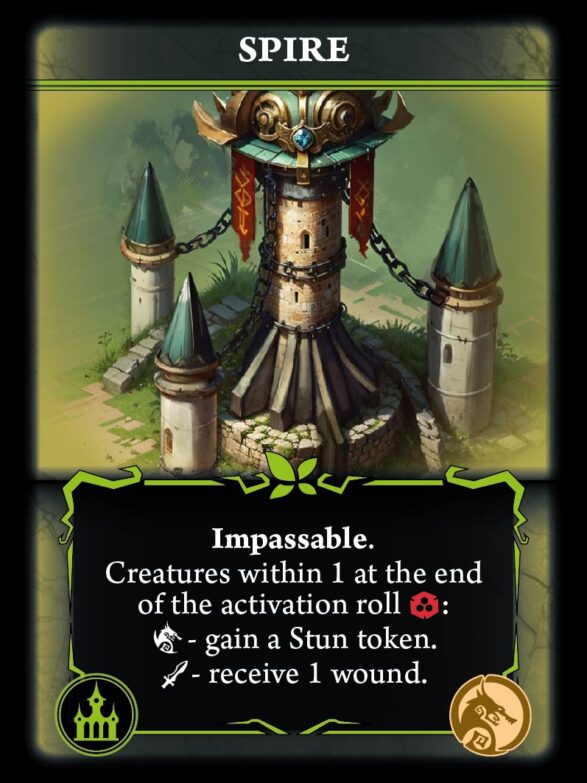
Finally, every battlefield must also contain 1 Special Terrain, a terrain with an area effect on adjacent spaces. For example, the Spire acts like a Tesla coil and can deal damage or inflict shock effects on any unit that ends its activation on a space around it. Special terrains give the battlefield an identity and serve as a point of interest around which the fighting takes shape.
Once the battlefield is set up, you need to choose a Scenario for the game. The game offers ten of them. These scenarios sometimes ask you to place additional tokens on the battlefield and give you extra conditions for scoring victory points. For example, in Capture the Banners, you score 1 victory point at the start of your turn if you control a hex containing an enemy token.
Choosing Your Hero Is the Starting Point of the Warseer Adventure
Choosing Your Hero
Before starting the game, you need to build your army. And at its head you need a leader of men: your Hero! The Hero defines a play style, your army list and your deck of cards. It is your most important unit. If it dies, the game ends immediately.
There are more than sixty Heroes in Warseer to choose from, each offering its own army configuration, deck and, of course, powers.
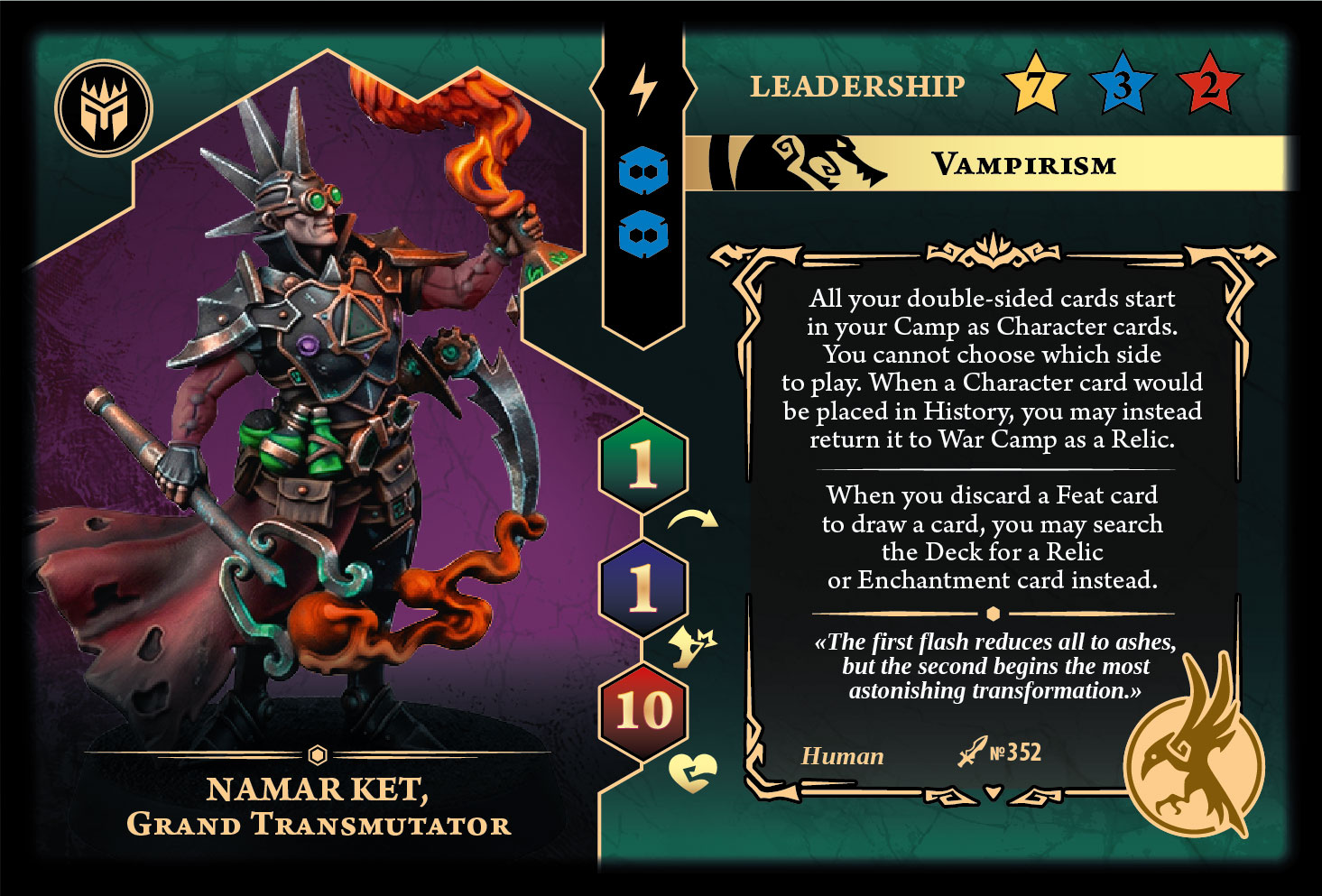
Each Hero belongs to a faction and has its own Leadership. In Warseer, Leadership defines the size of the army the Hero can lead. It is represented by values printed inside colored stars (see the top right of the Hero profile card); these correspond to ranks of soldiers (called Characters), and the number indicates how many units of each rank you may include in your army.
In the example above, the Hero Namar Ket can lead into battle:
- 7 Characters of his faction of the Yellow Star rank (the lowest rank),
- 3 Characters of his faction of the Blue Star rank (mid rank),
- 2 Characters of his faction of the Red Star rank (the highest rank).
Note that all these values are maximums. Nothing forces you to select that many. That said, there is no penalty for fielding a full army, and it is strongly recommended, because it multiplies your options for answering your opponent’s threats:
Is your opponent camping in their positions? Time to summon archers. Are your soldiers failing to pierce the armor of enemy units? Send in your mage, who is dying to throw spells at them!
Keep in mind, however, that only 7 friendly units can be on the battlefield at the same time. So you’ll have to make choices. You’ll also have to wait for one of your fighters to bite the dust before a slot frees up for a new recruit.
Building Your Army List
Which Characters to Recruit with Your Hero?
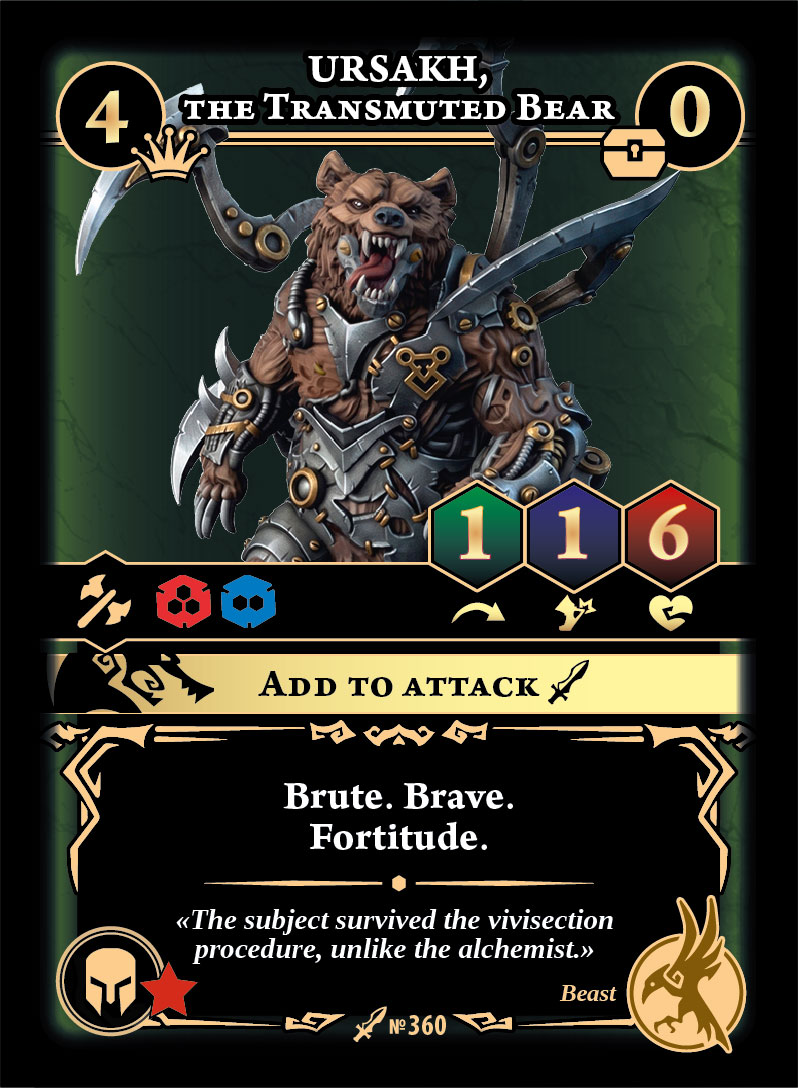
Characters have several stats that matter for your choices, starting with a summoning cost (see the top left corner) and a Revenue value, which is the amount the Character contributes to your economy once dead (see the top right corner). I’ll come back to these two values later when I cover how resources work in the game.
You’ll obviously pay attention to the combat stats: attack range, movement speed and hit points. Each Character also has special abilities, generally summed up as keywords. For reference, there are about twenty keywords, which is quite a lot for an arena game.
Finally, one last stat that can be relevant is the Character’s attack type: it is either a melee attack (🪓), a ranged attack (🏹) or a magic attack (⚡️). Technically, these attacks are resolved the same way and have no different effects. But some cards or abilities, friendly or enemy, can reduce or boost the power of certain attack types. For example, the Shield keyword prevents 1 damage from melee and ranged attacks. When building your army, it’s therefore best not to put all your eggs in one basket: diversifying your attack types will let you keep options open, whatever army you face.
Minions: Cheap Backup Forces
The Hero and the Characters are not the only fighters in the game. There are also Minions, represented by poker-style chips. In how they work, they are close to tokens in Magic: The Gathering.
With a single hit point each, they form a cheap workforce that you can quickly mobilize to strengthen your presence on the battlefield. Be careful: they count toward the total number of units allowed on the battlefield at once, but they are not included in your Leadership. You can summon them indefinitely.

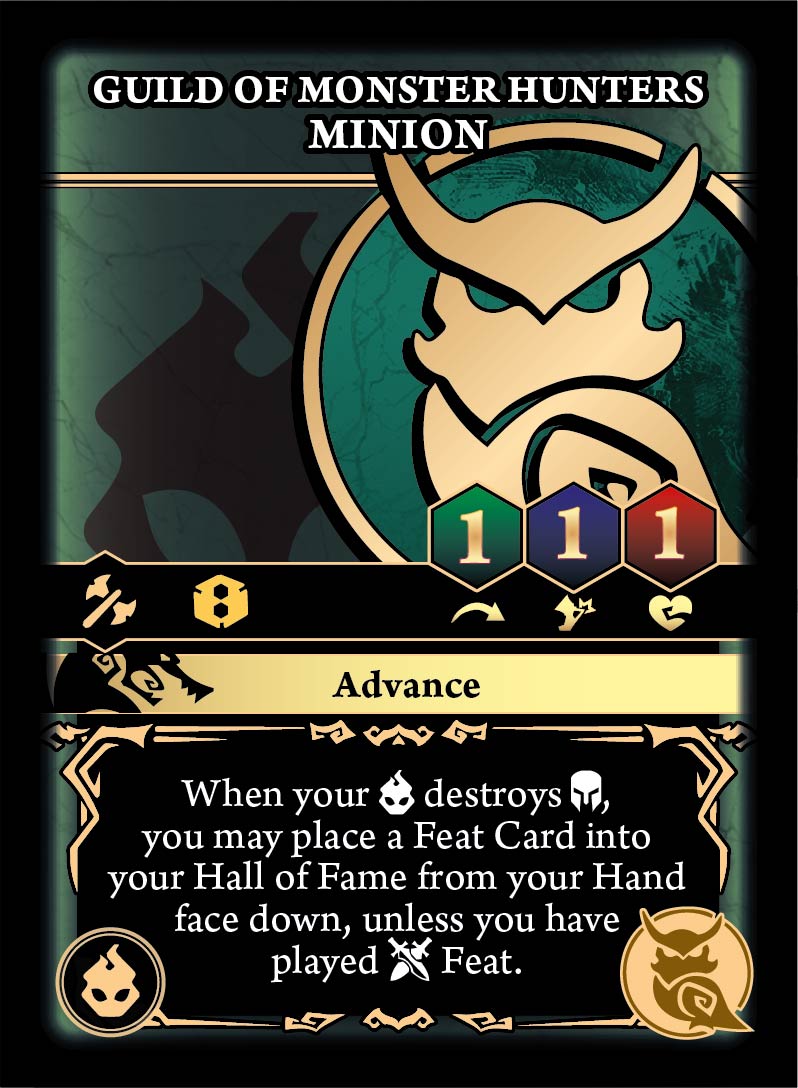
Minions are specific to each faction and play a central role in its identity. Their abilities define how the faction plays. For example, the Minions of the Guild of Monster Hunters grant extra victory points whenever an enemy Character is eliminated. A faction built for brawling, in other words!
A Word on Factions
There are 18 factions in Warseer, and within each of them you’ll find several clans. For example, the Alliance of the Unicorn faction contains four clans: the eponymous clan, the Vulpine Court, the Wrath of the Dryads and the Clans of Caledonia. Each clan is led by a distinct Hero and is defined by its own visual identity and play style.
To give you an idea of the Faction-Clan relationship, let’s go back to the Alliance of the Unicorn. This faction’s shared ability is the regeneration of its Characters (Minions can regenerate friendly units). Each clan takes advantage of this power in its own way:
- The Clan of the Dryads, led by Faelina, Lady of the Verdant Throne, pushes this principle even further by allowing friendly Dryads to regenerate beyond their starting hit points.
- The Clan of Caledonia brings together knights and foot soldiers with an aggressive profile. Its Hero, Uthor the High King, can deploy friendly Characters in contact with his base, whereas they must normally be deployed in the designated deployment zone. The idea behind this ability is to quickly infiltrate enemy territory and deploy your units right there, without fearing reprisals too much thanks to the faction’s regeneration.
Building Your Battle Deck
In addition to setting the size of your army, your Hero also imposes their own Battle Deck on you. The Battle Deck is the 30-card pile through which you manage your economy. It is made up of 20 faction cards and 10 cards tied to the Hero. Since the decklist is imposed on you, there is no deckbuilding dimension in Warseer. Signum Games therefore imposes a tightly framed economic management on you. That choice is understandable for game balance reasons, but Magic: The Gathering fans will inevitably be disappointed!

Resource Management
Warseer’s gameplay relies on two resources that you manage throughout the game: Revenue () and Hero Power (👑).
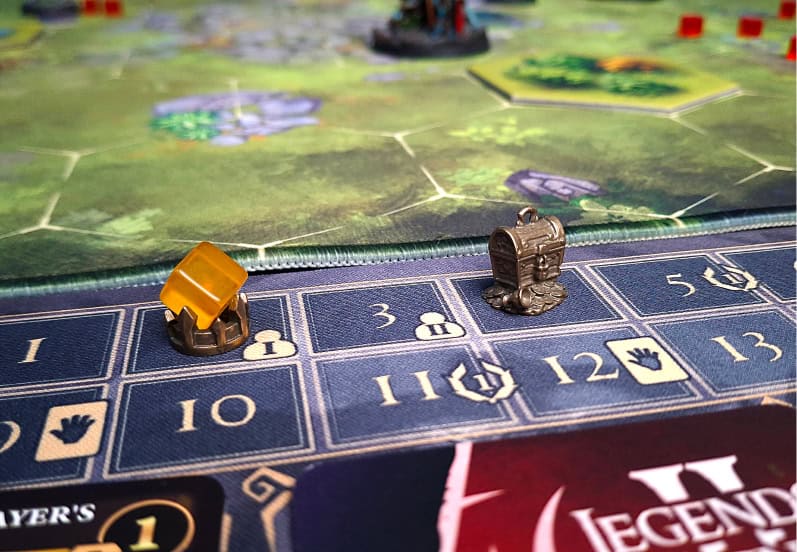
Hero Power (👑) is used to summon creatures, play cards or pay for effects. It is the most important resource, but it is inherently tied to the other resource, Revenue ().
Hero Power is always raised to the value of your Revenue at the start of your turn. In other words, the more your Revenue grows, the more your Hero Power will grow, and the more room to maneuver you’ll have to summon creatures and cast spells.
To borrow a metaphor, it’s as if your Hero’s military means were directly proportional to the state coffers.
Your short-term goal will therefore be to increase your Revenue in order to increase your Hero Power. Your Revenue is equal to the sum of the Revenue values of the cards in your discard pile. This zone, called the History, represents the state coffers, so to speak. In this discard pile you’ll find both cards from your Battle Deck and the cards of eliminated Characters. Each card’s Revenue contribution is printed in its top right corner.
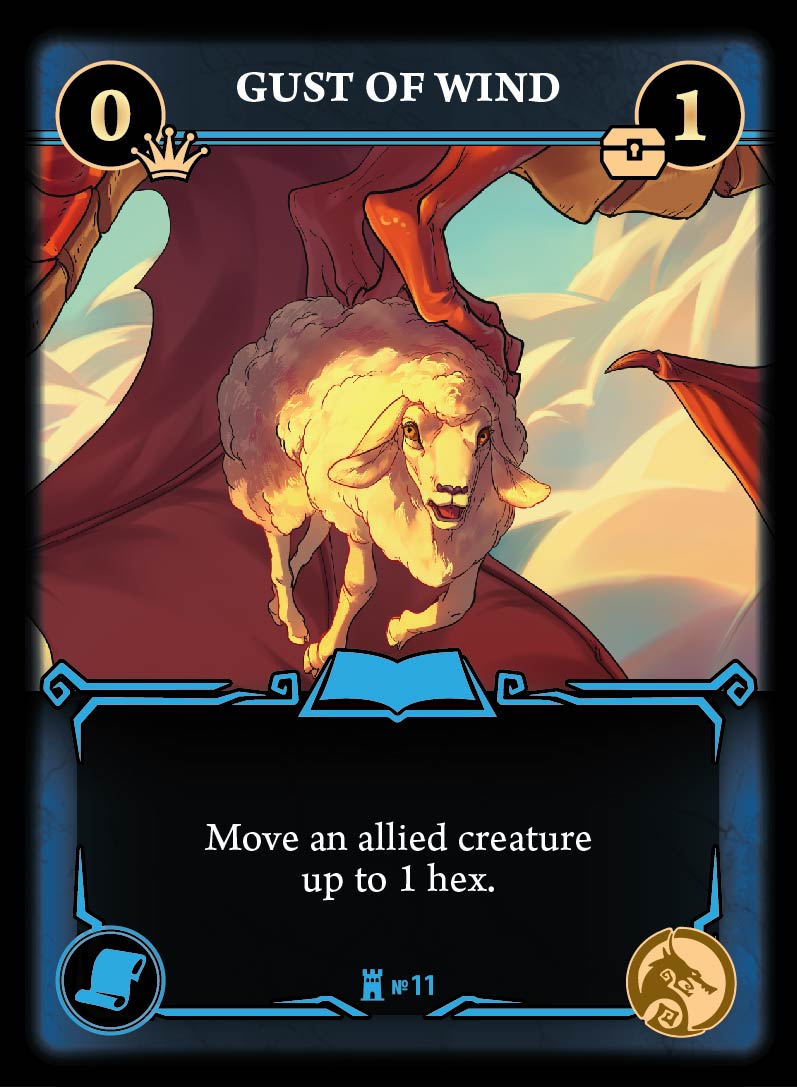
Take the card Gust of Wind above as an example: it gives 1 while in your discard pile and costs 0👑 to play from your hand. That makes it a very good card for an opening hand. It can be played for free and immediately increases your Revenue (and therefore your Hero Power on the next turn).
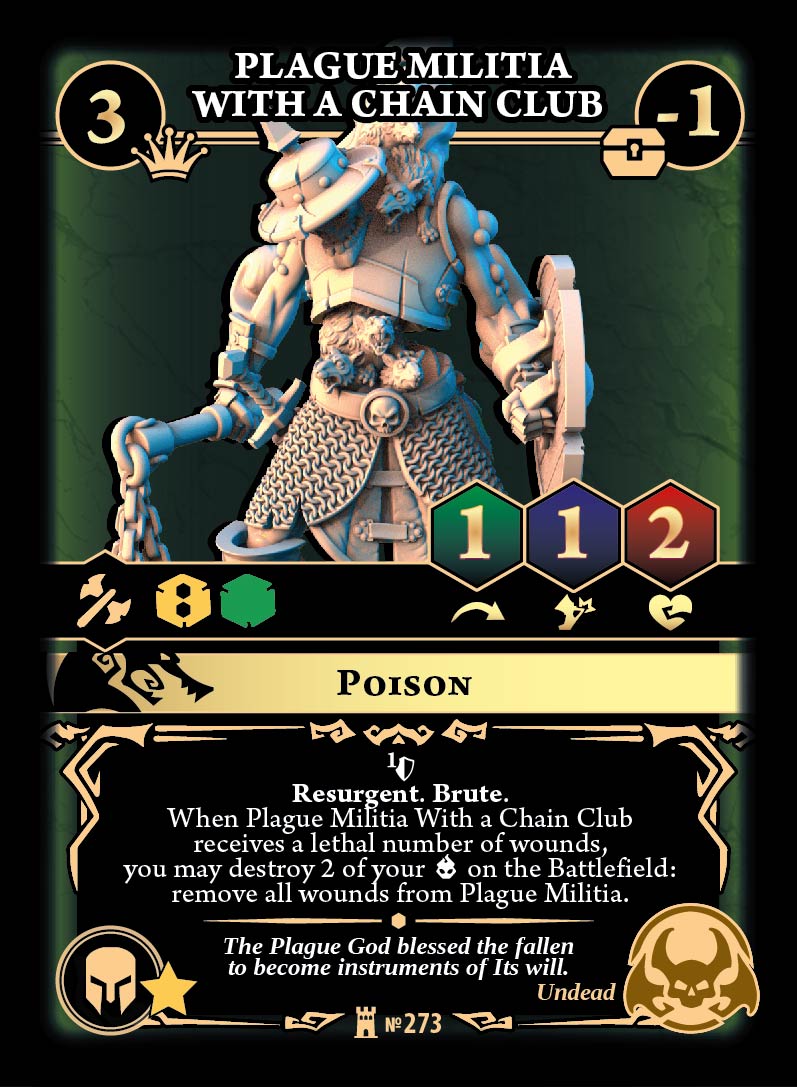
Once per turn, you are also allowed to discard a card from your hand to add it to your History. You won’t apply its effects, but no matter, since what interests you is its contribution to your Revenue. Be careful, though: some cards negatively affect your Revenue when they are in your discard pile. Take for example the undead Character below:
The Battle Deck, or Warseer’s Economic Engine
Your Battle Deck is made up of different types of cards. Some cards have a single, immediate use, while others are permanent or semi-permanent cards whose abilities can be used repeatedly. Since these cards don’t go to your discard pile once played, they don’t contribute to your Revenue (unless they are destroyed). Yet they generally have a Revenue value twice as high as spells. So there is a strategic choice to make with these cards: discard them to greatly increase your Revenue, or play them to get lasting effects?
The Feat Deck: Your Backup Ally and Your Partner on the Road to Victory
The game also uses a Feat Deck, shared by both players. You draw 1 card at the start of your turn, and that card explains the conditions you must meet to pocket 1 or more victory points. For example, “Eliminate a Character in a Forest”. If the card is too hard to score (which is frequent), you can discard it and gain one of the following effects of your choice:
- Deploy a Minion
- Gain 2👑
- Draw 1 card from your Battle Deck
The Activation System
Warseer uses a full sequential activation system (the opposite of alternating activation). That means each player activates their entire army, playing cards and other abilities in one go before handing the turn over to you.
As for activations, you may activate all of your units during your turn. There is no cap of 4 activations, for example, as in Warhammer Underworlds. That said, since you can control at most 7 units at once, you’ll have to handle 7 activations at most on your turn.
Each unit may perform only one action during its activation. Most of the time, you’ll use it either to Attack or Charge, or to Move or Sprint (move +1 space), although other actions exist.
Warseer’s Combat System
Once you’ve accumulated enough Revenue to summon Characters with your Hero Power, you’ll start flooding the battlefield and engaging in your first clashes!
Warseer uses proprietary dice for its combat system, which is the norm in arena games. What is atypical, however, is that combat is limited to a single offensive roll. The defender is a mere spectator of their own aggression. The opponent may possibly play a card to alter traits or abilities of the combatants. Provided you actually have such a card in your deck!
Apart from the blank face, the dice can produce several results: damage, push and critical hit. With a critical hit, the player can apply additional effects specific to each Character. These can include adding dice, inflicting conditions, increasing damage, and so on. A push moves the target of the attack back one space. This movement can be lethal, because if the target is pushed into a Forest, for example, it takes 1 damage. The same goes if it can’t be pushed because the neighboring spaces are blocked. Good positioning of your troops can therefore increase your chances of dealing damage.
Find Legend Of Signum II: Warseer players
Join the Legend Of Signum II: Warseer Discord community and find players near you.
 Join
Join Warseer’s Strengths
Sumptuous Miniatures and Remarkable Print Quality
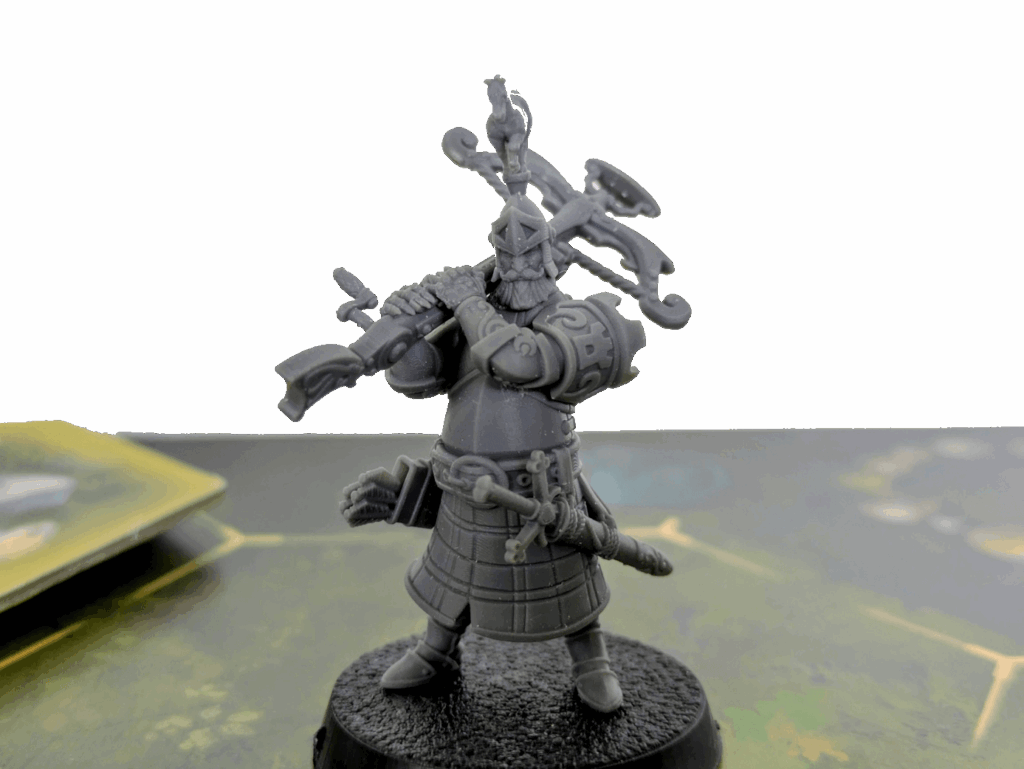
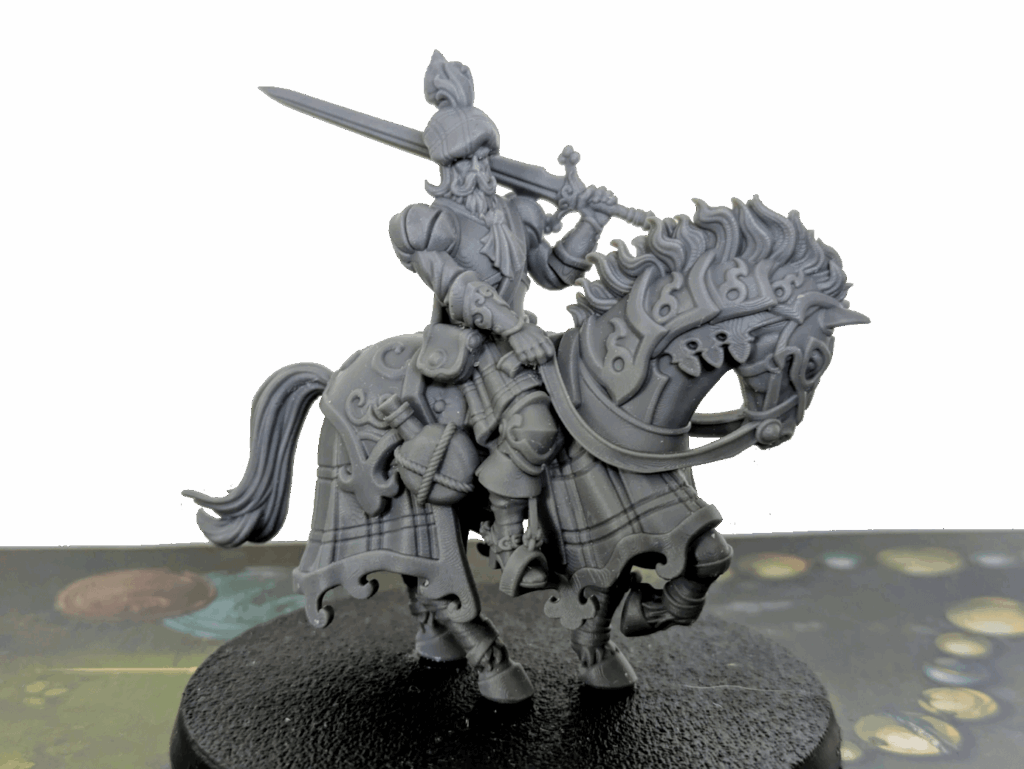
Warseer’s miniatures pack a serious punch in terms of sculpting: the details are dense, deeply cut and ultra crisp. As for manufacturing, we’re looking at a hybrid technical resin that completely changes the game compared with standard resin. The body of the miniature keeps all its rigidity, while exposed and fragile areas (such as swords or spears) are flexible, which lets them absorb shocks and twisting (well, still avoid throwing them off the second floor). No more of the pain of tips snapping clean off in transport. Incidentally, the miniatures come in several components to assemble.
Resource Management at the Service of Strategy
The resource management, combined with a deck of cards, is a success. It is mostly early in the game that this system is at its most interesting: you have to resolve dilemmas with the cards in your hand, deciding which one to sacrifice to feed your Revenue and which ones to keep for later. When you manage to play several cards in a row and then feed your Revenue right after, it’s very gratifying. The Battle Deck, combined with your Characters’ abilities, opens the door to some really satisfying combos. There’s a real joy in setting traps and coming up with clever tactics to outwit your opponent.
The only downside is that in the mid-game, or even the late game, this economic management loses its appeal as soon as you’ve accumulated enough Hero Power to play comfortably. I would have liked the economy to remain a brain-teaser from start to finish, as in Scythe, especially since it is this dimension that sets Warseer apart from its competitors. It’s a shame to end the party so early.
That said, achieving a perfectly fluid and optimized economy is far from easy. You come away from some games frustrated, knowing you could have done better, yet already eager to start another one to try, this time, to optimize your choices and resources as much as possible.
Its Different Game Modes
I haven’t mentioned it yet, but Warseer offers several different game modes. Beyond the standard mode called Duel (which I’ve covered in detail throughout this article), Signum Games has gone all out by offering five alternative ways to play.
The first is Skirmish, which removes the Battle Deck from the game, focusing entirely on combat. With no economy to manage, all Characters are deployed at the start of the game. You command a much smaller warband, and the game is limited to a set number of turns.
The second is Solo (paid expansion). This mode features a series of scenarios that players progress through step by step, building their warband as the adventure unfolds. Between scenarios, players can purchase upgrades and recruit new Characters.
The third is Tournament, which consists of several interconnected PvP matches. This mode introduces a new resource, Dragon Coins, which serve as currency for recruiting new Characters between matches. In essence, it shares quite a few similarities with Solo mode.
The fourth is Free-for-All. This is essentially the standard game mode, but played with three or four players.
The fifth is Alliance Clash, a team-based mode in which two teams of two players face off against each other (2v2).
Answering Your Opponent’s Threats with the Right Units
What I really like in Warseer is that your units wait to be summoned. During a game, some of them may even never be, a bit like football substitutes crossing their fingers that their coach will send them onto the pitch. Analyzing the situation on the battlefield, then consulting your War Camp to pick the right Character, the one that will answer the threat of the moment, is truly enjoyable. It reminds me of video games like Age of Empires, in which you have to produce your units, sometimes in reaction to what the enemy has.
It’s a pleasure that other wargames lack, such as Star Wars: Legion. That kind of game asks you to build your army list before you even know who you’ll be fighting and what the victory conditions will be. I’m thinking, for instance, of the TR-TT, which can be equipped with three weapons: an anti-tank cannon, an anti-personnel flamethrower and a hybrid machine gun. Having to choose upfront makes no sense and isn’t thematic in the slightest.
Some games soften this problem. A Song of Ice and Fire asks players to prepare two lists in tournaments, and they choose the one that best suits the opposing army. Marvel Crisis Protocol, with its ten-character roster of which only a few will be used during a game, also comes close to this logic. Warseer pushes the idea even further, and it’s great: it’s very thematic and really enjoyable to play.
Warseer’s Weaknesses
A Game That Lacks Polish
While testing Warseer, I had the feeling that the game had been rushed out. Whether it’s the gameplay, the illustrations, the rules or the copywriting, the game would have benefited from being kept in the oven a few more months to be refined.
First, the English writing is particularly clumsy. The game’s cards suffer from heavy syntax, non-idiomatic phrasing and, in some cases, literally incomprehensible text. This weak writing hurts the understanding of the rules and consequently makes card effects open to interpretation. This is all the more burdensome because the absence of deckbuilding prevents you from kicking divisive cards out of your deck.
I’ve put a few examples of cards with problematic copywriting below to give you an idea:
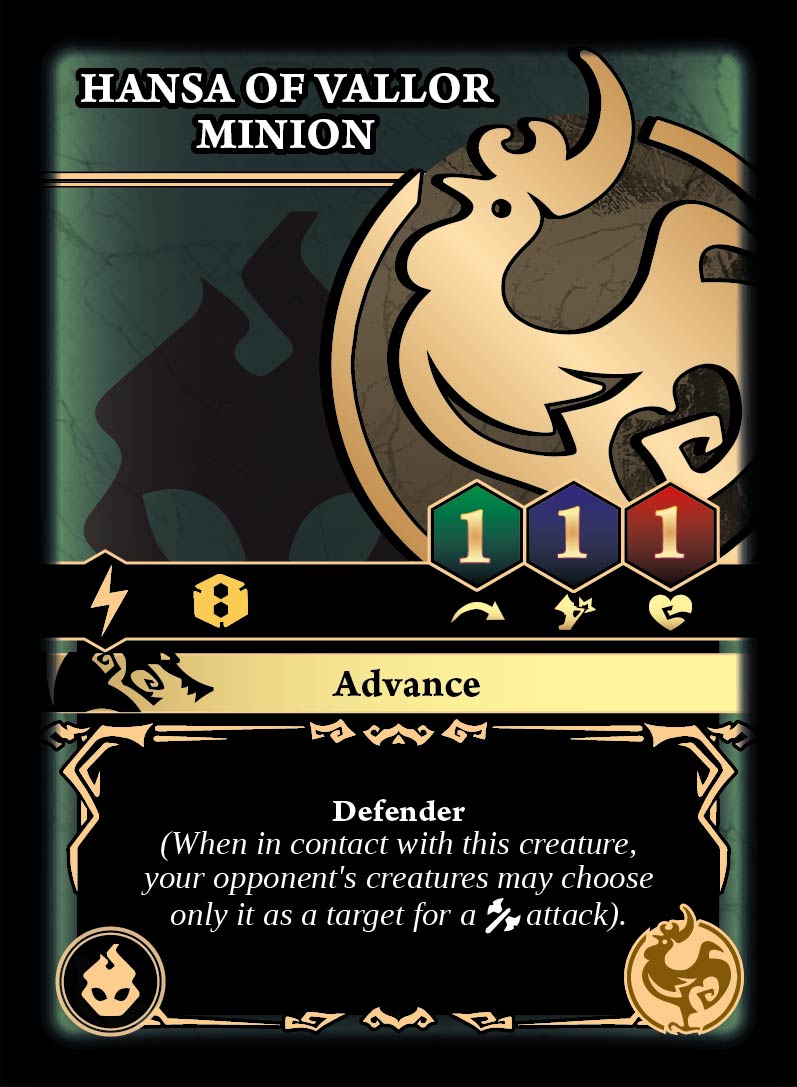
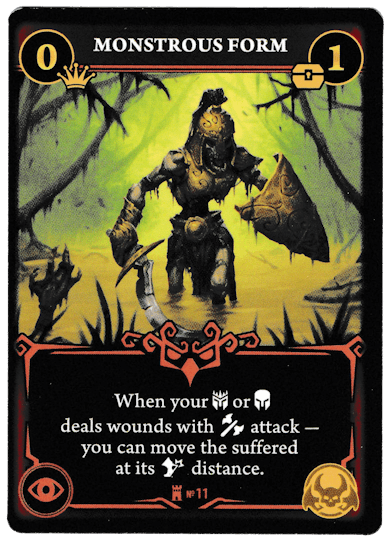
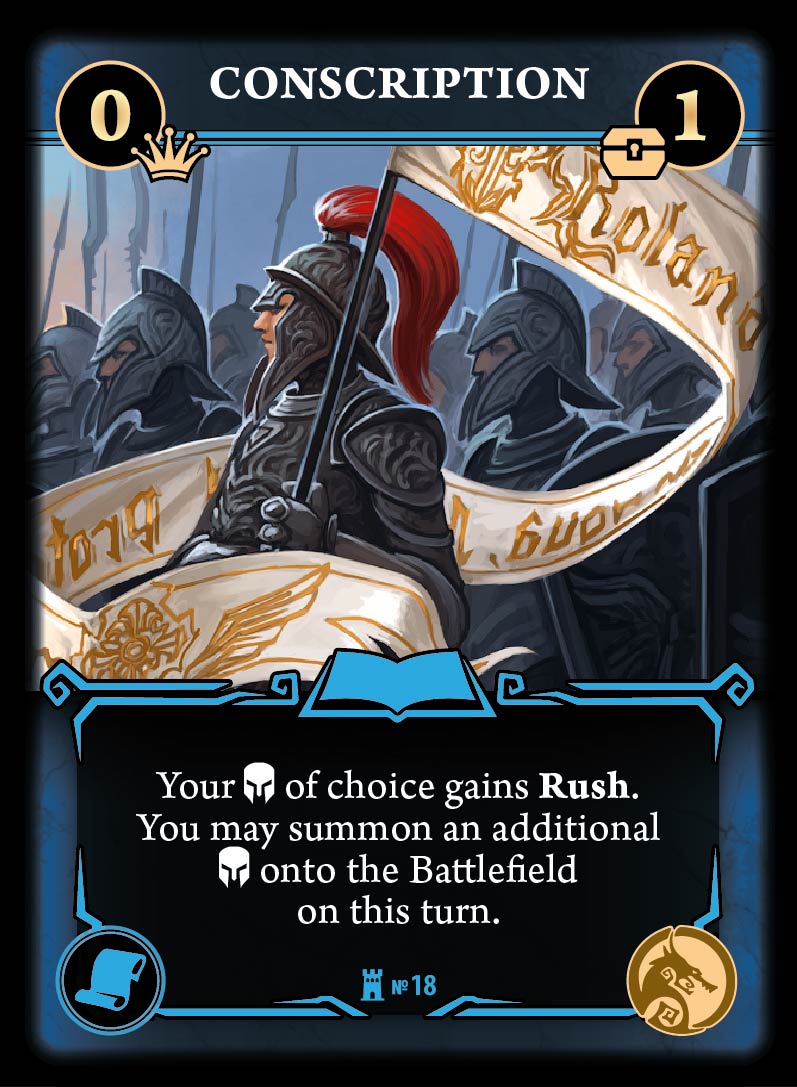
These clumsy English phrasings are probably explained by the fact that the publisher Signum Games is a company based in Ukraine, and that Warseer’s rules were, I imagine, initially written in Ukrainian before being translated into English. Note that the French version of the rulebook still contains passages left untranslated from English into French.
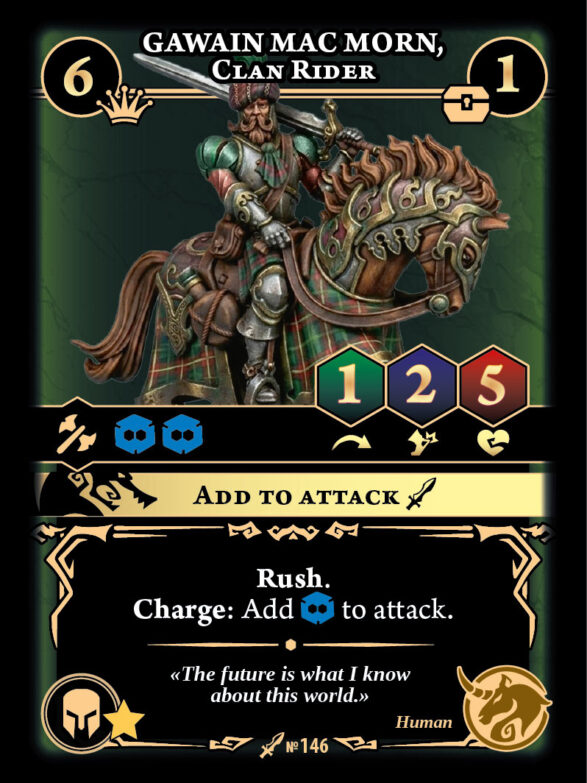
Second, the art direction lacks consistency. This is glaring on the Character profile cards: they display sometimes a photo of a painted miniature, sometimes a digital render of the raw sculpt, and sometimes a genuine hand-drawn illustration. These visual discrepancies make me think of a production run in a rush, where cards are illustrated with whatever was at hand.


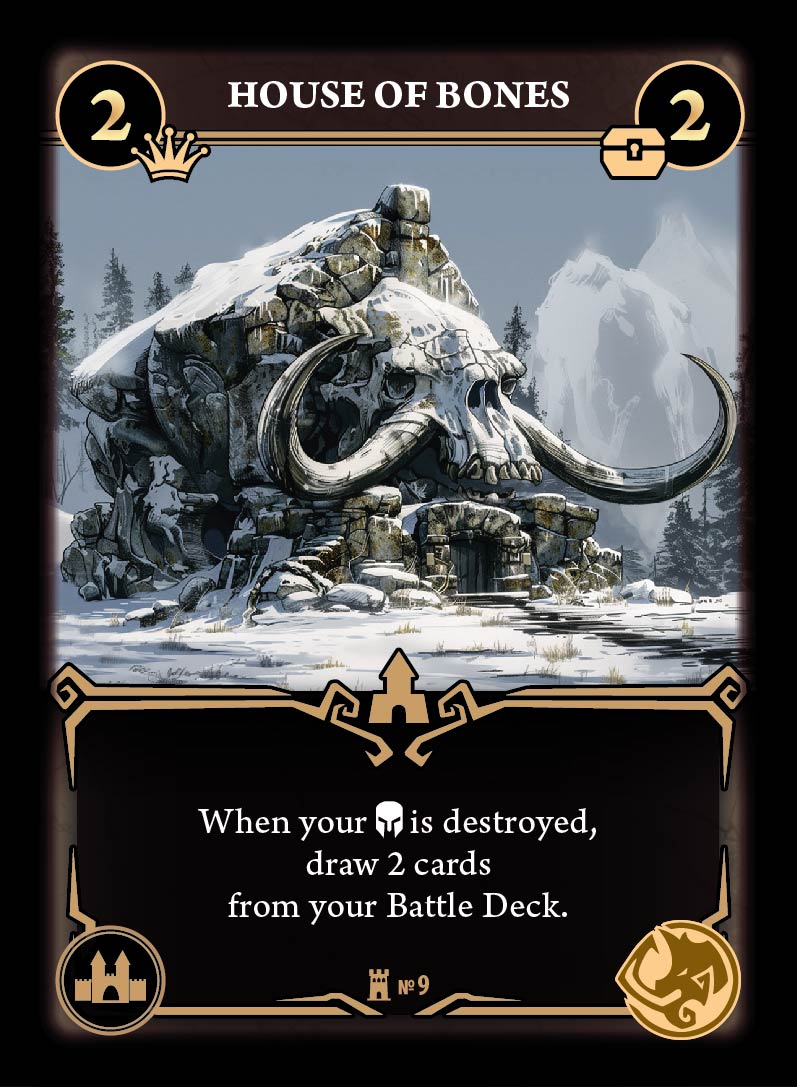
Third, the rules governing how cards work and how long they last remain murky, even absent. My experience with Magic: The Gathering taught me that in a card game, every word counts. In Warseer, the writing sorely lacks precision, particularly on unit targeting and effect expiration.
For example, you’ll find the phrasing “a Character of your choice” and, elsewhere, a simple “your Character”. That latter wording creates a real rules problem: since you control several Characters at once on the battlefield, which one does “your Character” refer to? See the examples below:
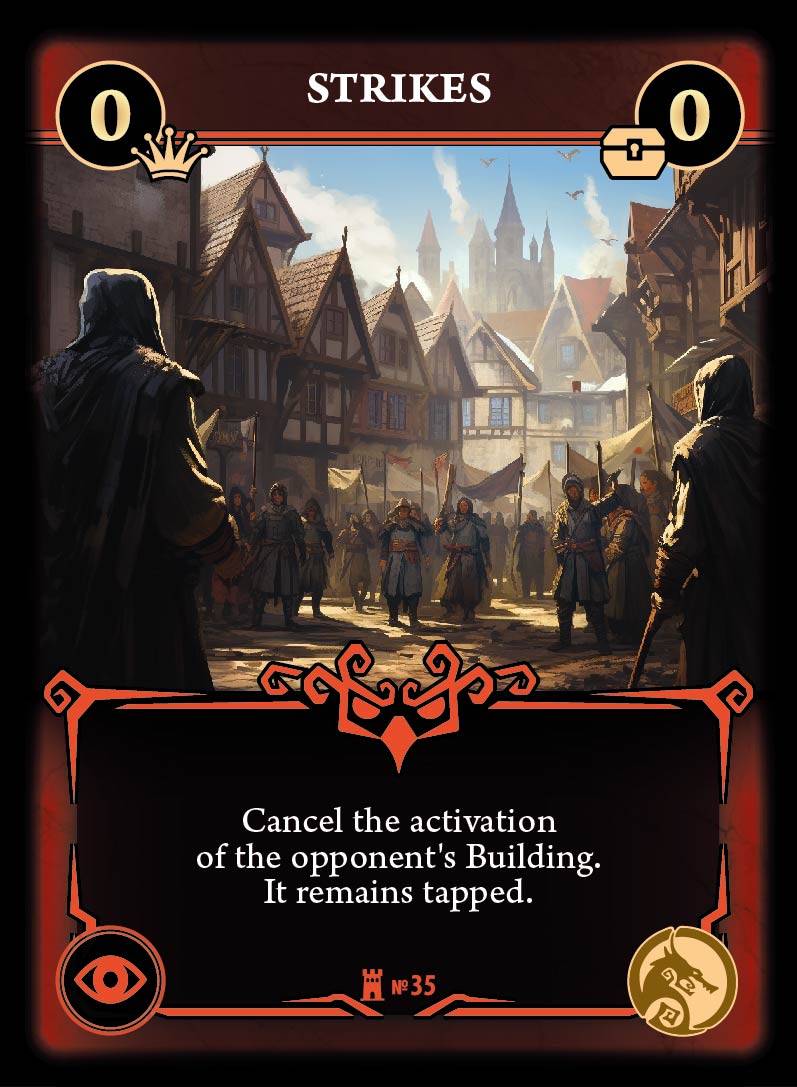
Gameplay That Sometimes Lacks Punch
Because of its economy-building mechanic, Warseer is a game that takes its time. You inevitably have to wait a few turns before each player accumulates enough Hero Power. But even once you have enough resources to start the hostilities, the rules keep a slow pace, for three reasons:
First, the deployment rules are restrictive: you can only summon one Character per turn, and it can’t activate after being summoned. There is of course the Rush keyword, which lets some units move after being deployed, but 1) they are the exception and 2) they can’t attack on the turn they are deployed.

Second, the large place given to spells and unit regeneration abilities. These are probably there to compensate for the absence of defensive dice in combat. The problem is that this regeneration, too easy to access, cancels out whatever progress either player makes in wounding Characters. This inevitably slows the race for points: eliminating units becomes harder, which accentuates the feeling of a stalemate.
Granted, my experience may have been biased, since I imagine a lot depends on matchups. In my case, I tested the game with the Clan of Caledonia (Alliance of the Unicorn) against the Plague, Rats and Knights clan (Undead Baronies of Styx), two clans from factions that put regeneration front and center. This matchup is all the slower because the Baronies’ Minions, which can only deal 1 damage 🪓, are completely harmless against the Warriors of the Clan of Caledonia, who cancel 1 🪓 damage thanks to their Shield keyword.
Finally, one last point that weighs on the game’s pace is the obligation to play with a pre-built Battle Deck. I can’t speak for the decks of every faction, but the ones I tried were poorly optimized. They contain situational or even useless cards against your opponent, such as the power to protect yourself from certain conditions like Poison, even though the opposing faction doesn’t rely on that mechanic. Or they contain too many Relics, the type of card used to reinforce your Hero (even though a Hero can only be equipped with 3 at a time). With enough experience in card games, you quickly spot the deck’s areas for improvement. For the Clan of Caledonia, for example, out of the 30 cards in the deck, 10 have regeneration effects, 5 of which are Relics. That’s a third of your deck that doesn’t contribute to victory, only to avoiding defeat.
These dead cards have no other fate than ending up in your discard pile to feed your Revenue. When you draw them early in the game, they aren’t a penalty. But in the mid-game, when all players have enough resources, these cards no longer offer any relevant solution. I forgot to mention it, but resources are capped: 10👑 and 15.
A slow pace is perfectly acceptable, as long as it doesn’t translate into passive turns with no impact.
The Starter Set’s Paper Battlefield
The last flaw I noted isn’t about the game itself but about the components, and more specifically the game board. It’s made of paper. Exactly like those theme park maps you grab at the entrance. And we all know what state that map is in at the end of the day. This choice of material is quite surprising compared with the rest of the components, which are exemplary: you get two neoprene mats for the decks, poker chips to represent Minions, plastic cubes to track various effects and resources, and miniatures of exemplary quality! It’s as if the entire production budget went into the components, but by the time they got to the game board the coffers were empty, and Signum Games had to settle for a paper board. It’s a strange decision given that the play area, unlike the poker chips or the mats, is essential to playing Warseer. It should be able to stand the test of time.
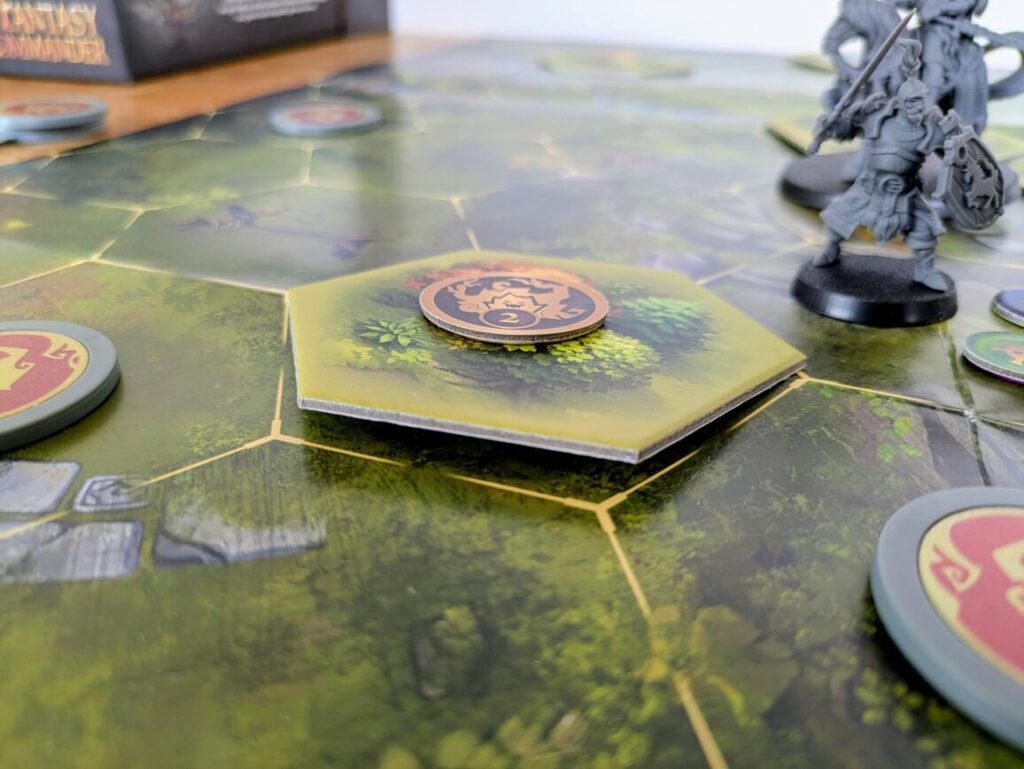
Fortunately, should anything happen to it, Signum Games sells the play area in neoprene format in its shop. But players were entitled to expect a cardboard version of the game board, just as the competition offers.
Conclusion
Legends of Signum II: Warseer is an arena game that has forged a real identity with unique gameplay. Its economic engine, where your discard pile acts as the state coffers, creates gripping dilemmas early in the game. Keeping your army “in reserve” to summon the Character that answers the threat of the moment is a thematic idea that few wargames dare to push this far. The hybrid resin miniatures, sturdy and well detailed, complete a generally polished set of components. The six game modes offer plenty of replayability, whether you’re playing solo or teaming up with friends.
The game does, however, lack finish. The English writing on the cards is shaky and leaves too much room for interpretation. The art direction is uneven, and the paper board clashes with the rest of the components in the box. The game also suffers from a rather slow pace, due to very present regeneration effects and pre-built decks that are sometimes poorly optimized. You end up going through a few sterile turns in the mid-game. I think a bit more polish would have made Warseer a great game.
Beware of Import Taxes
If you buy the game from Europe, note that it will be shipped to you from Ukraine, which is outside the European Union. Your purchase will therefore be subject to an import tax.
Useful Resources
All the game’s cards as well as the rulebook can be obtained for free on the publisher’s website.
Written by:


Support us via Maxi Reves ✨
Help us promote lesser-known miniature games and grow their communities. Order your miniatures from Maxi Rêves using the code MAXITC and be part of our mission!