
 by
by Artillery is slow, if not completely static. So, what is the point of investing in this type of weapon in a Bolt Action army? That is the question we will explore in this article.
Foreword
This article follows on from the previous piece about mortars, which can be found here:
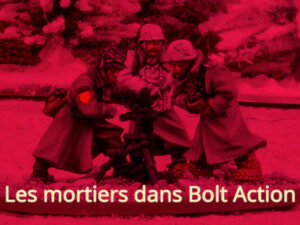
Complete Guide to Artillery in Bolt Action
At first glance, the role of artillery—a static or slow weapon—might seem like a low priority. In a game of Bolt Action, mobility for infantry is often favored, tanks act as mobile artillery, and movement is frequently the key to victory.
Artillery then appears as the “poor relation” of the army list. However, well-utilized artillery can have a real impact on the battlefield. First, there is the psychological impact: a well-placed medium or heavy anti-tank gun will “deny” certain lanes of advancement to your opponent.
Howitzers entrenched behind line-of-sight blocking cover can bombard enemy lines via indirect fire. Artillery then becomes a weapon that, when properly deployed, can radically influence the course of a battle.
Another aspect of artillery is its visual impact. With their large bases, it is possible to create beautiful dioramas by adding vegetation or various scenery elements that make the piece feel “alive.” Dug into a bunker, it loses all mobility but becomes a “hard point,” offering a genuine tactical challenge to your opponent.
Anatomy of the Artillery Battery: Types of Pieces
Howitzers: The Versatile Artillery
The strength of howitzers lies in their ability to perform indirect fire, like mortars, but also devastating direct fire. This versatility is a major asset. If your opponent deploys tanks, you can still utilize your weapon from behind obscuring cover. If they field several infantry squads, howitzers in direct fire mode will allow you to ravage enemy troops.
Every army offers light, medium, and heavy howitzers. Adding a dedicated spotter facilitates indirect fire. These pieces, significantly cheaper than tanks, trade mobility for raw efficiency. Once positioned behind heavy cover with a good line of sight, they can wreak havoc. They can even destroy light armored transports or even tanks with the heaviest howitzers.
This target versatility is a strong argument when building your list. Clever deployment can also allow you to stack Pin markers or wipe out entire squads, supporting the deep progression of your own troops.
Anti-Tank Artillery
Anti-tank artillery is a major strategic choice if you wish to secure a zone against an armored force. While its primary function is to stop tanks, don’t forget that these guns often have HE (High Explosive) shells which are very effective against infantry. However, this choice remains more situational than a howitzer.
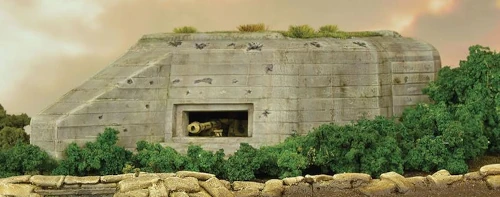
The real trade-off is the budget: a fixed gun costs much less than a mobile tank. That said, tactical analysis shows that with fewer than two or three pieces, the cost-effectiveness of static anti-tank remains limited, and its impact can be minimal if the opponent avoids its lines of sight. Conversely, by lining up multiple pieces, you saturate the battlefield and force your opponent to take reckless risks to progress. Finally, do not underestimate the resilience of these units: a well-protected artillery piece is often harder to dislodge than one might think.
Artillery Crews: Veteran, Regular, or Inexperienced?
An artillery piece is a true “fire magnet.” Whether it’s direct fire, mortar counter-battery, or armored raids, your artillery will be targeted. So, what training level should you choose?
In my view, investing in Veterans for static pieces like heavy howitzers is rarely cost-effective. The jump from a damage value of 4+ (Regular) to 5+ (Veteran) is often negated by the power of opposing heavy weapons pounding you. Regular troops offer the best value for money: they hit more easily than inexperienced troops while remaining affordable. Save your points to beef up your shock infantry and let your gunners do their job as “Regulars”—it is more than enough to hold the line.
HE Templates: Area Power
- Light Howitzers (2″ HE): Essential for two major reasons:
- Zone Clearing: A single shot can hit 2, 3, or even 4 soldiers within an entrenched unit.
- Psychological Control: Unlike a standard infantry squad, a howitzer inflicts D2 Pins. It is the ideal tool to “pin down” an enemy unit for a very affordable point cost.
- Medium (3″) and Heavy (4″) Howitzers: These take things to the next level. With D3 Pins and a much larger impact area, they are capable of routing an entire squad in a single salvo. Their high Penetration (Pen) value makes veteran troops extremely vulnerable, often ignoring their save bonuses. However, their cost is a real concern for efficiency.
Deployment Strategies and Tactics
Positioning
Positioning artillery requires experience. The best approach is to place them behind heavy cover, allowing a save against direct fire, overlooking a field large enough to cover a wide line of sight.
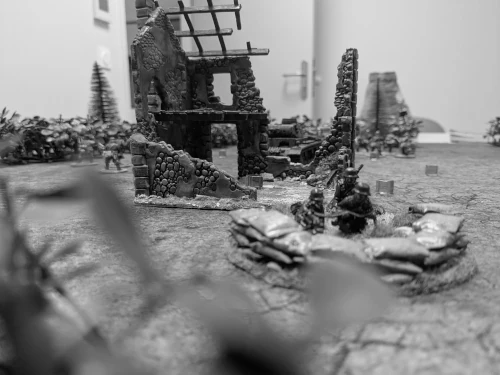
A position in a bunker is possible and historically accurate, especially in landing scenarios. In narrative games, this should offer interesting options. However, consider game balance; placing artillery in a bunker must be accounted for when balancing the forces.
The Role of Smoke: An Interesting Option
Smoke shells are practical for blocking lines of sight across “No Man’s Land.” You sacrifice a shot to place a smoke column, allowing your motorized and foot troops to progress safely. Artillery then takes on a non-lethal but interesting support role. This is also worth considering when deploying your artillery—covering wide areas lacking cover with smoke.
Priority Targeting
“To a hammer, everything looks like a nail!” That’s how you know it’s a hammer. Should anti-tank artillery only target tanks? Generally, it is important to take advantage of the HE capability of anti-tank guns to target enemy squads or lighter vehicles.
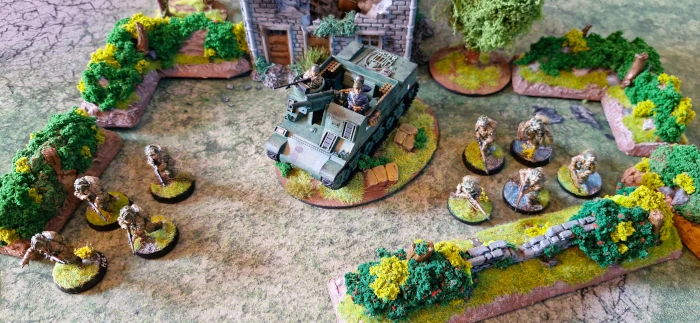
If no targets are visible when your artillery activates, use the Ambush order. It then becomes a real threat that can span multiple turns, denying your opponent movement within your line of sight. And if it’s Turn 1 and nothing is available, why not fire smoke to support your troops’ advance?
Artillery Spotters
Spotters for howitzers are generally available for Germans and Soviets (for heavy howitzers). As for the US, they can have a spotter for medium howitzers. The 10-point option is very interesting, especially if you wish to fire without a line of sight using indirect fire mechanics. We’ve seen that it becomes profitable on the same target after two indirect shots. This is where running mortars and howitzers in tandem can be effective for pounding enemies safely tucked behind defensive lines.
Need advice building your army list?
Join your country’s Bolt Action Discord community and get answers to your questions.
 Join France
 Comparative Analysis: Which Piece to Choose?
A howitzer is an inexpensive way to add an Order Die to your list. Furthermore, used well, it can be more cost-effective than a support squad equipped with small arms (rifles/LMGs) for a similar cost.
An artillery platoon in your list provides heavy support—static, yes, but powerful—for a reasonable cost (between 300 and 350 points, or about 25% of a 1250-point list), offering 3 to 5 Order Dice depending on your choices.
Comparison of Howitzer Point Costs (Regular Crew)
| Nation | Light (2″) | Medium (3″) | Heavy (4″) | Spotter |
| USA | 45 | 85* | 135* | +10 pts |
| Germany | 50 | 90 | 140* | +10 pts |
| USSR | 50 | 90* | 140* | +10 pts |
| Price Delta | Base | +40 | +50 | – |
| Surface (sq inches) | 3.14 | 7.07 | 12.57 | – |
The American Economic Advantage: The US has the cheapest artillery. This 5-to-10-point difference might seem negligible, but in an optimized list, it pays for an extra option (like an SMG for an officer).
The Tank Dilemma: For comparison, a M4A3 Sherman 105mm costs 215 points (Regular). It offers the same firepower as a medium howitzer but with 9+ armor and total mobility. The choice between the 85-pt fixed gun and the 215-pt tank is the heart of list-building strategy.
Focus: Howitzers in Konflikt ’47
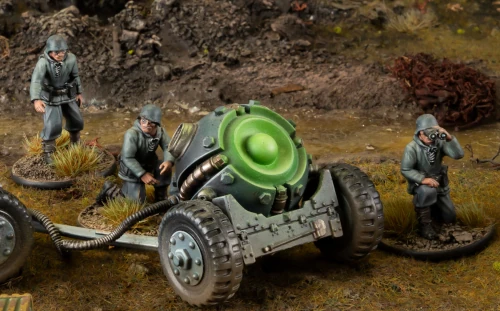
In the universe of Konflict ’47, artillery is the natural predator of Combat Armor (Grade 1 or 2). Take the Strahltruppen: with their wide formation (2″ spacing) and 7+ armor save, they are virtually immune to small arms. The heavy howitzer is the perfect answer: its penetration value cancels the armor advantage, and its large template can catch multiple models despite their dispersed formation.
Counter-Battery Fire
This is like a “sniper duel” on a cannon scale. Simply put: it is the art of using your own artillery to silence your opponent’s. In Bolt Action, this is a crucial strategy because opposing artillery is often the greatest threat to your static units.
Why Engage in Counter-Battery Fire?
Artillery is the ideal target for indirect fire: it is slow or static. It is prime prey for enemy mortar teams. It is therefore vital to deploy your expensive pieces to limit direct lines of sight. Hiding them behind scenery or in a bunker is excellent. Remember that an artillery piece only has 3 to 5 crewmen: one good HE hit can wipe out the unit instantly.
The mortar duel: a classic source of tension
This is the most common form of counter-battery fire. Mortars arc their shots over obstacles, engaging in a deadly duel where victory goes to the side that “locks onto” its target first. One tactical solution is to field multiple artillery pieces in order to saturate targets. By deploying three guns (for example, a mix of mortars and howitzers), you spread the threat. Even if you lose one piece during the exchange, the remaining two can still operate effectively, justify the investment, and punish the opponent.
Strategic Importance of the Spotter
To succeed in counter-battery fire without exposing your gun, the Spotter is indispensable. Positioned high up or with a clear view, he transmits coordinates to your gun, which remains completely sheltered.
- Tactical Tip: If you have a spotter and your opponent doesn’t, you virtually win the duel by default: you can shell them while they remain unable to target you.
How to Counter Counter-Battery?
If you feel the enemy artillery is starting to “range in” on you (hitting on a 4+ or 3+):
- Give an “Advance” order to your piece (if size permits). Even a micro-movement resets the enemy’s indirect fire bonus. They will have to start over looking for a 6 to hit you.
Conclusion: Artillery, the Soul of the Game?
Artillery in Bolt Action is much more than a simple damage dealer. It is a control tool, a psychological threat, and a fire magnet that frees up the rest of your infantry. Whether you choose the versatility of a light howitzer for Order Dice or the raw power of a heavy gun to level bunkers, never forget: in Bolt Action, he who controls the sky often ends up controlling the earth.
So, ready to make it rain steel?
Want to learn more?
Written by:


Support us via Maxi Reves ✨
Help us promote lesser-known miniature games and grow their communities. Order your miniatures from Maxi Rêves using the code MAXITC and be part of our mission!