
 by
by Introduction
July 1986. John Markwink had been pinned down in the outskirts of East Berlin for two days. His Team Yankee reconnaissance unit had crossed into East German territory under the cover of night, moving silently to scout the main supply routes where the Soviets were expected to advance. They had been ambushed by a small East German BMP-1 unit that knew the terrain intimately. His unit had been decimated in minutes. Now, he was the sole survivor of his section, without a radio, deep in enemy territory. He followed the road from about fifteen meters inside the forest, hugging the cover of the brush and thickets. According to his map, Checkpoint Delta was still 3.5 miles away.
It was a sweltering morning, far hotter than back home in Colorado. Sweat poured down his back, the weight of his flak jacket had been crushing him for hours, and the forced march was taking its toll on his body. It would have been a walk in the park if not for that damn wound in his side. He had applied a bandage, but it was slowly becoming soaked in crimson. He thought back to his Ranger training. “Hard training, easy war,” his instructor—a MACV-SOG Vietnam veteran—used to tell him. John remembered those piercing eyes and that cold intelligence. If he survived this opening gambit of the war, would he one day become like him?
The Cavalry Finally Arrives!
Then, he heard the distinct roar of a gas turbine engine, the unmistakable signature of his regiment’s M1 Abrams tanks; the boys were close. John energized, scrambled toward the road, and reached the edge of the ditch. Two hundred meters away, the familiar silhouette of the tank sat on the road. It was stationary, having returned to total silence. John could only hear the hum of the turret drives as the crew traversed the gun.
The turret adjusted its bearing by aa few degrees, and then the main gun thundered. The shockwave slammed into John’s chest, the blast instantly deafening him. He dove back into the ditch. In the distance, an explosion rang out as black smoke rose into the sky. The Second Battle for Berlin had officially begun, and American troops had just drawn first blood!
What is Team Yankee ?
Set against the backdrop of the Cold War, Team Yankee brings to life a fictional 1980s Third World War, imagining a world where the Warsaw Pact finally launched its invasion of the West. This wargame place you at the head of a company-sized force composed of various units:
- Infantry platoons,
- Tank platoons,
- Armoured Personnel Carriers (APCs) and IFVs,
- Self-propelled artillery,
- Air support in the form of attack helicopters,
- And strike aircraft.
Regarding the models, the game features modern vehicles and equipment from that era. It uses the 1/100 scale (15mm), which allows you to deploy multiple units on a reasonable table surface.
From page to tabletop: The origins of Team Yankee
Before it was a miniature wargame, Team Yankee was a novel. Written in the late 80s, it explores an alternate history where the Cold War turns into World War III in Europe. Fans of techno-thrillers will likely see the influence of Tom Clancy’s “Red Storm Rising”—an author who also inspired several video games. The game even features a dedicated campaign inspired by “Red Storm Rising” that serves as a core source of lore.
Scenery is easy to create, as tank battles often take place in open plains. However, you can also design more complex tactical environments:
- Wooded areas,
- Grassy plains,
- Agricultural zones with fields and hedgerows,
- Industrial sectors,
- Modern urban settings,
- And “Khrushchyovka” housing blocks, either ruined or intact.
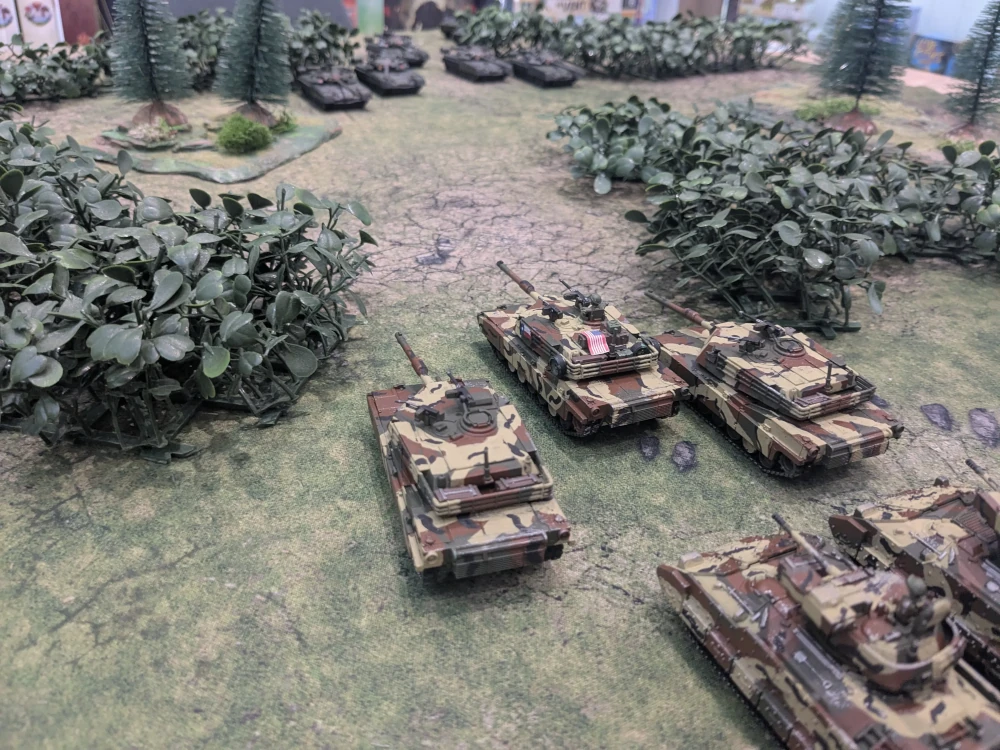
Core gameplay mechanics: tactical & fast-paced
Team Yankee is based on a classic D6 (six-sided dice) system. It offers a tactical turn-based approach where each side completes its full turn sequence.
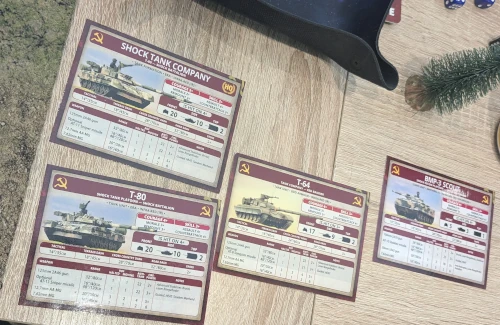
The game uses clear, easy-to-read Unit Cards that contain all the stats for your army.
Phase 1: The remount step
“Bailed out” vehicles or “pinned” infantry must pass a Remount (or Rally) check. If the roll is successful, the crew regains their composure and can “get back into the fight.” Otherwise, the vehicle remains stationary, unable to move or fire for the rest of the turn.
This system represents minor damage or the crew being “rattled.” On a modern battlefield, a shot that fails to penetrate doesn’t always leave the tank unscathed; the shockwave of the impact can easily daze the crew inside.
Phase 2: The movement phase
During the movement phase, all units of the active player can move. The distance covered depends on the terrain type and the tactical intent of the move (such as “Tactical” vs “Dash”).
Standard terrain, roads, or “Difficult Terrain” (ruins, woods, marshes) influence the movement distance. To enter Difficult Terrain, vehicles must pass a “Cross” check. If they fail, they might become “bogged down” or simply fail to enter the zone.
Movement also requires maintaining Unit Coherency within a platoon, measured from the Unit Leader. This allows for fluid yet organized movement across the table.
Phase 3: The shooting phase
All vehicles and infantry with a valid target—meaning in Line of Sight and within range—can fire. Artillery is also available but requires a unit equipped with a spotting team or observer to “range in” on a target.
Hitting a target depends on the target’s own skill or “Hit On” rating. Everything is pre-calculated on the Unit Cards, making the shooting mechanics very streamlined. You can find this under the “Is Hit On” section, showing the number required on a D6 to score a hit.
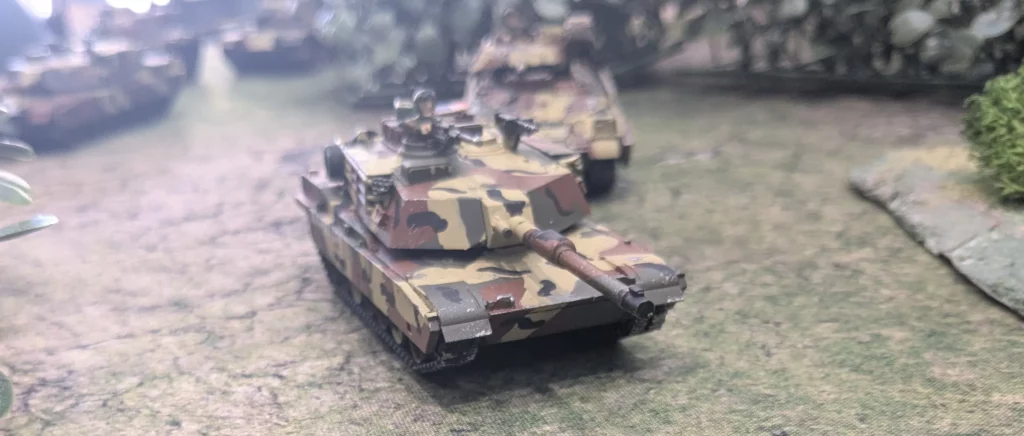
The angle of the attack is crucial: a vehicle’s Armor Rating varies significantly depending on its orientation. Generally, tanks hit from the side or rear are much easier to destroy.
Once you verify that a hit is powerful enough to penetrate the armor, you roll against the weapon’s Firepower rating to see if the target is destroyed. If successful, the target is knocked out. If the Firepower check fails, the target is “Bailed Out” (shaken) and will need to pass a Remount check at the start of the next turn to get back into action.
Ending the turn
Once these three phases are completed, the player’s turn comes to an end.
In this brief introduction, I haven’t detailed specific game elements like aircraft, infantry, or artillery. However, the mechanics in place handle this type of equipment in a highly credible manner, perfectly suited for the context of modern combined arms warfare.
Nations in Team Yankee: USA vs. USSR
When thinking of the Cold War, the most obvious nations immediately come to mind. Western Europe is the primary battleground, with NATO forces—led by the Americans and West Germans—facing off against the Soviet Union and East Germany.
For now, I will focus on the content featured in the Starter Set.
The Americans
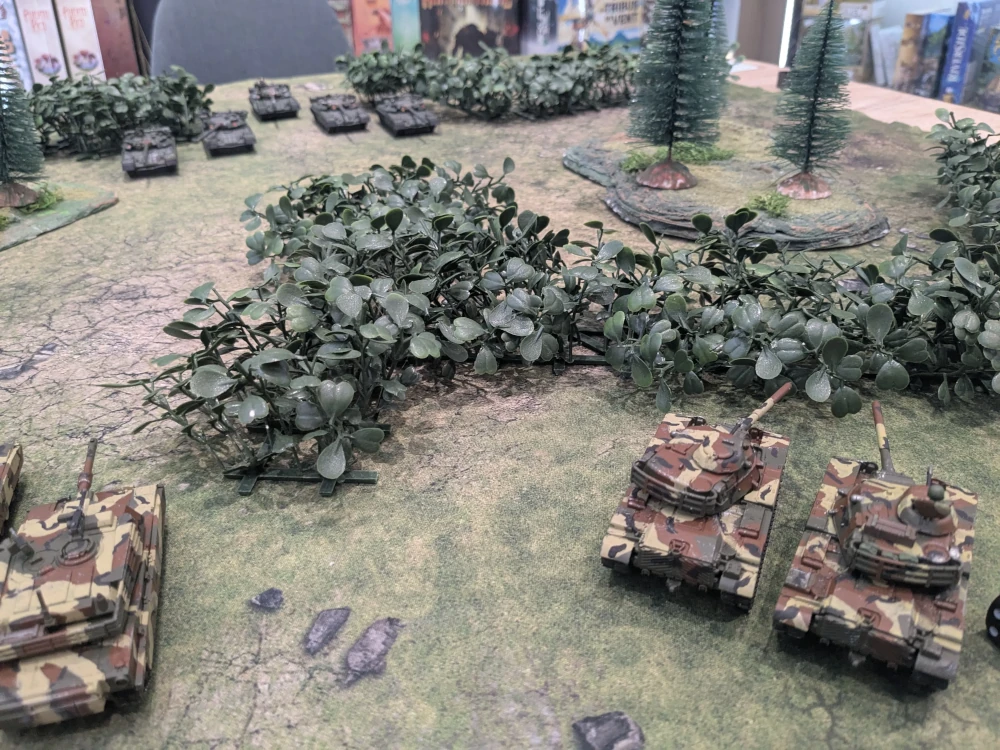
Armed with their high-tech M1 Abrams tanks, the Americans are capable of firing twice per turn (ROF 2) at two different targets with no penalty. US doctrine relies on saturating the combat zone while maintaining high mobility. Each vehicle is a masterpiece of engineering but comes with a significant points cost. Consequently, losing even a small portion of your force can quickly create a tactical imbalance. Players choosing the US must be extra vigilant when committing their troops to the heat of battle.
The loss of just one or two vehicles can represent a major operational and tactical setback on the tabletop.
Soviet Russia
Since the end of World War II, the Soviets have worked tirelessly to match and surpass the so-called Free World. They have often favored pragmatic solutions, replacing complex “high-tech” systems with reliable, robust “low-tech” alternatives.
Their military aviation, their victories in the Space Race, and their technological choices for Main Battle Tanks are all directly shaped by this philosophy. For instance, a T-80 tank—the counterpart to the American M1 Abrams—is significantly cheaper to produce in game terms.
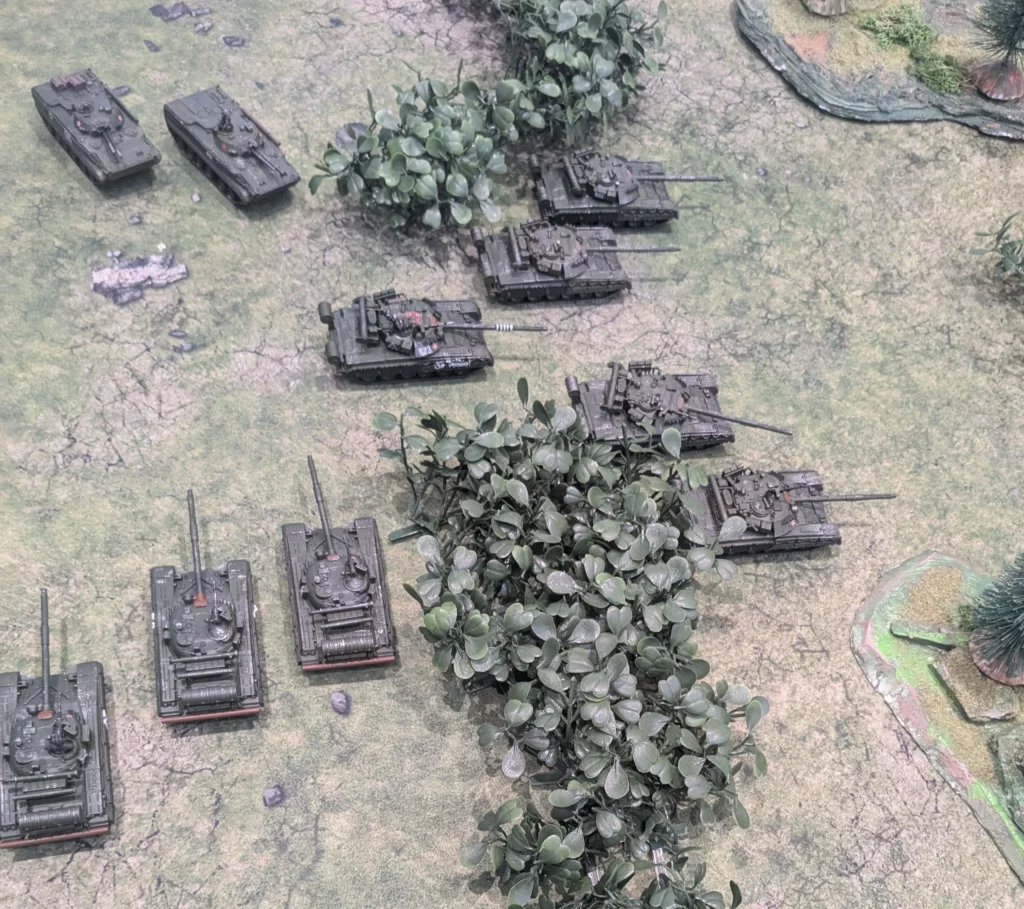
As a result, Soviet players in Team Yankee command armies that are more enduring and resilient. They can afford the loss of several tanks without their overall strategy collapsing. This dynamic is reflected both in army list building and in the tactical decisions of players who choose the Soviets.
Getting started: What’s inside the Team Yankee Starter Set?
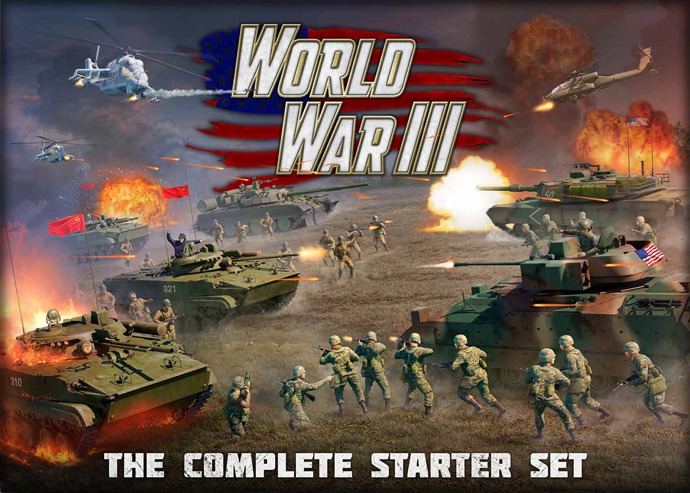
The Starter Set contains two balanced forces—American and Soviet—providing everything you need to explore the scenarios and start playing with a partner.
It includes a complete A5 rulebook covering all the core rules, as well as a Quick Start Guide to help you get into the action smoothly with a handy rules summary.
The set also provides Unit Cards for all the models included, along with twenty dice in two different colors.
American force content
- 3x Abrams Tanks
- 4x Bradley Scouts
- 4x M249 SAW Teams
- 3x M47 Dragon Teams
Soviet force content
- 4x T-80 Tanks
- 4x BMP-3 Scouts
- 4x AK-74 Teams
- 3x RPG-7 Teams
Terrain for Team Yankee
Given the 1/100 scale, you will need a large combat area to fully enjoy the game. Team Yankee is a game of maneuver that emphasizes coordinated assaults and the principle of fire and movement (advance under supporting fire).
The weapon ranges add a layer of realism. Above all, the scale of the game truly shines when you can exploit this range through deep deployment and long sightlines.
The Starter Set already offers two well-balanced forces, allowing you to “get into the thick of it” for a modest price. Naturally, it includes all the necessary materials to play with the models provided in the box.
The 1/100 scale also allows for the reuse of various terrain pieces, especially natural elements like rocks, fences, hedges, and wheat fields (often made from doormat cutouts). However, if you wish to add buildings—ruined or otherwise—the scale is not compatible with 28mm or 32mm scenery.
Assembly & painting for Team Yankee
Assembling and painting tanks at this scale is a fast process. This is a significant advantage for players who don’t want to spend weeks painting their armies before hitting the table.
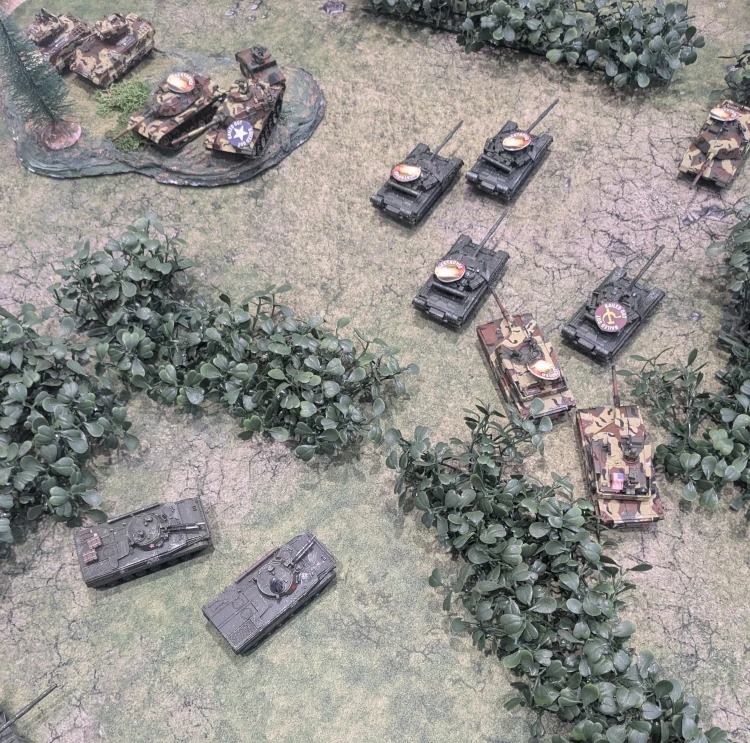
A simple olive drab or light green base coat is enough for the majority of vehicles. The infantry requires a bit more detail, but it remains very manageable. This game is perfectly suited for speed painting techniques, a topic I discuss in an article you can find here.
Tactical depth in Team Yankee
With its numerous tactical elements, Team Yankee allows players to explore the various facets of modern warfare:
- Armoured platoon support,
- Tank hunter coordination,
- Artillery strikes,
- Air support,
- Light cavalry via APCs and IFVs,
- Helicopters,
- Self-propelled artillery support,
- And even drones.
Team Yankee strikes a perfect balance between tactics and strategy, ensuring that success on the battlefield is a matter of superior command, not just good fortune with the dice. Over the six turns that a standard game lasts, you must find the “right rhythm” between calculated risk-taking and caution.
The impact of your weapons and how you use them depends on anticipating your opponent’s moves and your own positioning, turn after turn.
In Team Yankee, you can push into enemy territory, support your frontline troops, or provide rear-guard cover. The core rulebook features several objective-based scenarios, which also encourages you to “think through” your army lists carefully.
Find Team Yankee players
Join your country’s Team Yankee Discord community and find players near you.
 Join France
 What won me over
What I saw deeply impressed me in terms of immersion and respect for military doctrine. To me, Team Yankee is a serious wargame, firmly rooted in a credible and well-documented universe. Much like games set in World War II, the authors’ intent was to provide an immersive and authentic experience.
The rules are easy to pick up, but that doesn’t limit the game’s depth. Without falling into the trap of being a “crunchy” simulation, the system is light enough to fade into the background, allowing you to focus on what matters: positioning, tactics, and global strategy.
I also noticed very few rule exceptions, which makes both your capabilities and those of your opponent much clearer and easier to track during a match.
Conclusion: The call of the modern battlefield
If you want to dive into modern-era wargaming, Team Yankee is an excellent entry point. It’s accessible, fast-paced, and features a concise rulebook. The Unit Cards provide enhanced clarity, showing all essential characteristics at a single glance.
This game won me over. I’d like to thank my gaming partner for taking the time to introduce me to it. I was so convinced that I bought the complete Starter Set right after our playtest. The miniatures you see in this article were painted by him.
Team Yankee isn’t just a miniature game; it’s an invitation to serious, immersive tactical play within a fictional World War III setting.
Don’t wait any longer: the front line is waiting for you!
Written by :

Maurice, Bolt Action editor
I have been passionate about imaginative worlds since childhood, between toy soldiers and role-playing games. In the 90s, I delved into wargames like Squad Leader and Warhammer 40K. Today, I spend my time painting miniatures, working on my own game, and playing Bolt Action, my current favorite wargame.
 Buy him a coffee
 Explore our coverage by game


Support us via Maxi Rêves ✨
Help us promote lesser-known miniature games and grow their communities. Order your miniatures from Maxi Rêves using the code MAXITC and be part of our mission!