 by
by If you follow tabletop miniature games, the name Haywire is likely familiar. Yet behind this solo tactical skirmish game set in the modern era lies a story few players know: that of its French creator. I had the opportunity to sit down with him to trace his journey and the birth of his game—from his initial ideas all the way to signing a contract with publisher Modiphius Entertainment. So, if you’ve ever dreamed of creating your own game, I invite you to read Martin’s story—it’s as fascinating as it is inspiring!
The author

Jack Brussell: Hi Martin, I’m thrilled to be interviewing you today. As someone passionate about game design, having the chance to chat with a miniature game creator is absolute bliss! For those who might not know you yet, could you introduce yourself briefly and tell us about your very first encounter with the world of miniature gaming?

Martin: My name is Martin, I was born in 1989, and I live in Alsace. People might also know me under the handle Solo Wargamer, particularly on Discord. I’m the creator of Haywire, a solo tactical skirmish game published since 2026 by Modiphius Entertainment.
As for my very first contact with miniatures, you have to go back to my middle school days with Warhammer 40k. But it was fairly limited: nobody around me played, and I found the rules way too dense. What appealed to me above all was the creative side and the joy of painting a few models. I quickly set it all aside, and the hobby stayed in the closet for many years.
JB: What brought you back to miniature gaming? And how did you end up specializing in the modern era—a setting that is ultimately quite rare in tabletop wargaming, which is heavily dominated by fantasy and sci-fi?
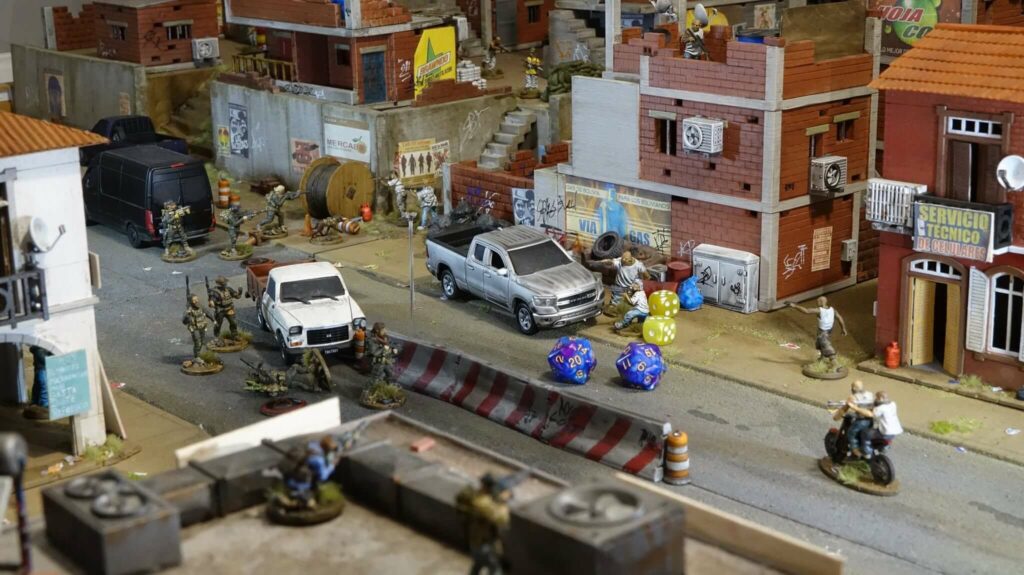
M: The spark was purely visual, about ten years ago. I’ve always been passionate about military themes, and one day while browsing Pinterest, I stumbled across two images that changed everything: one was an ultra-realistic model of a SWAT team next to an tactical vehicle, and the other was a top-down view from a building onto a street covered in dead leaves and zombies. It was a promo image for The Walking Dead: All Out War (2016). I thought to myself: it would be amazing to have a modern military miniature game, but with the tension of a survival game.
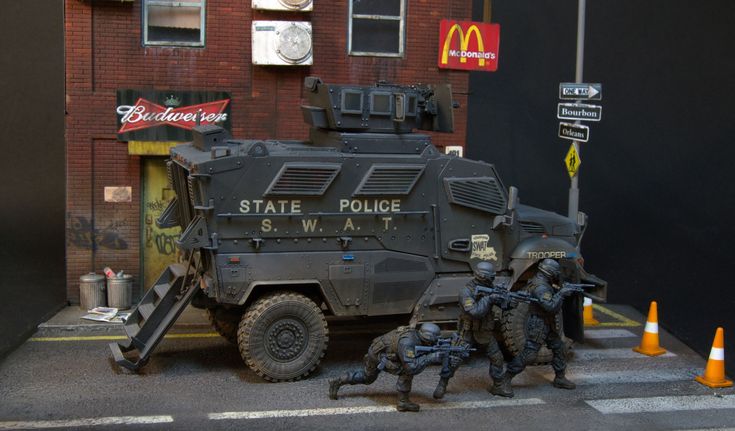
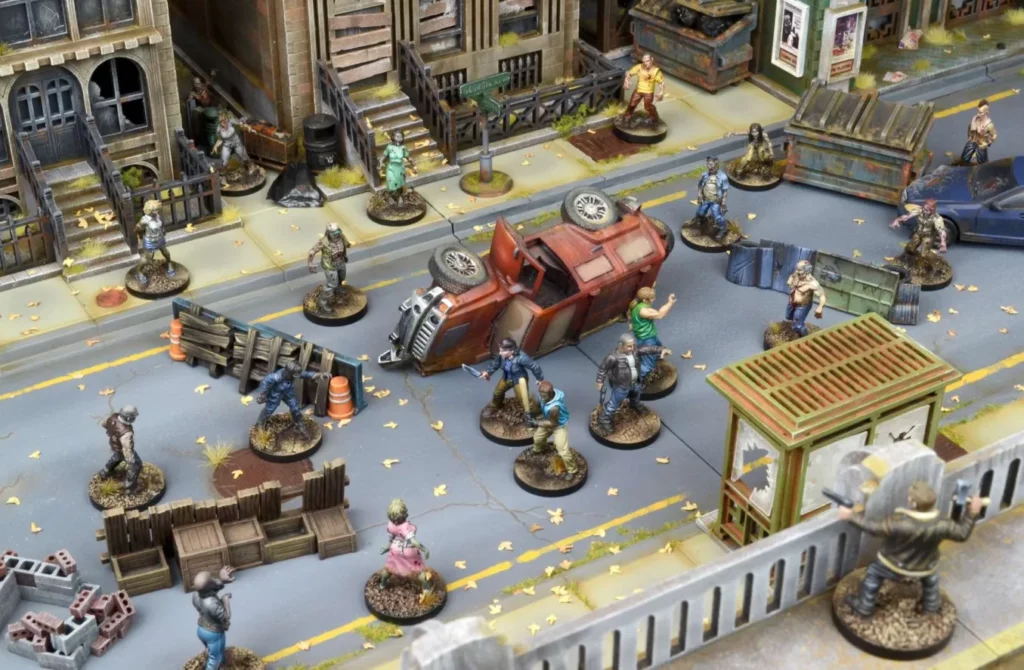
So I started researching, and to my surprise, several already existed. However, my choice landed on Spectre Operations (2016). The game had just been released, offered a realistic modern setting, and above all benefited from an active Facebook community. That was the deciding factor, as it allowed me to interact with other players and exchange ideas.
If Spectre Operations is a PvP game, how and why did you transition to solo wargaming?
Out of necessity, really. Because I moved around a lot, keeping a regular gaming group was tricky. Plus, modern wargaming remains very niche in local clubs, which are often heavily focused on fantasy or board games. It was hard to find local players who shared this specific passion for modern settings.
Without players around me, I naturally started playing Spectre Operations solo. But since the system wasn’t designed for that, I began creating my own house rules to adapt it for solo play.
I imagine solo Spectre Operations wasn’t enough on its own, otherwise Haywire would never have seen the light of day, right? What was the catalyst for creating your own system? Was it born out of frustration with your solo experience in Spectre Operations, a pure creative drive, or the realization that there was a void in current solo modern wargaming offerings?
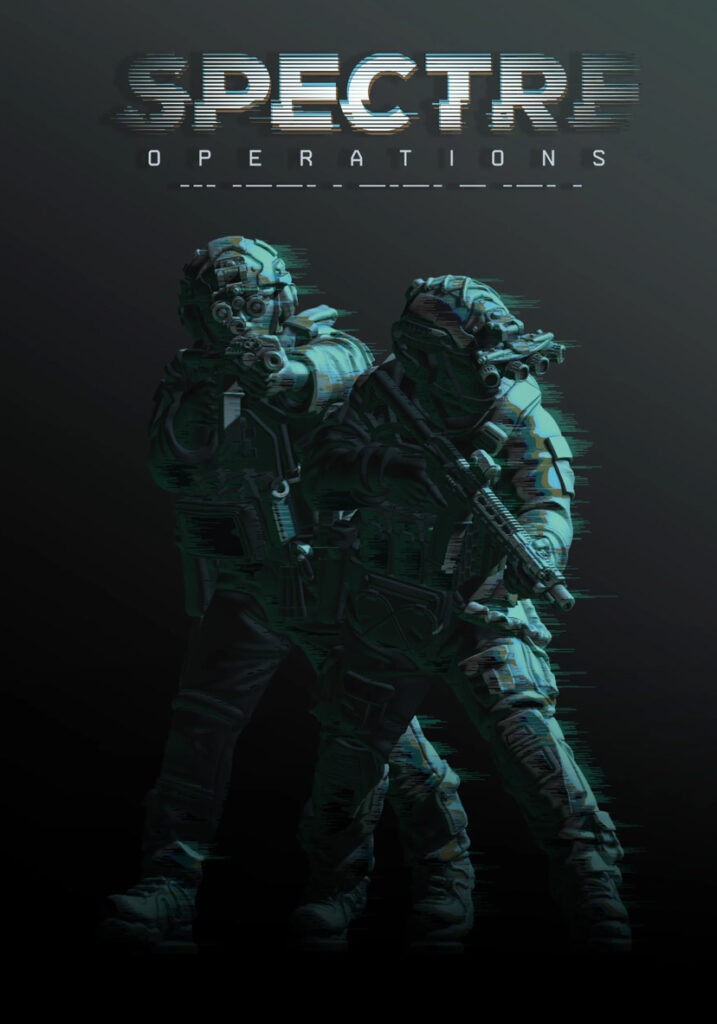
The turning point was the major shift within Spectre Miniatures (editor’s note: the publisher behind Spectre Operations). You have to understand that the game’s original rules were written by Matt Adams, a British Army veteran. Spectre Miniatures had bought the licensing rights for a certain number of years, but a little over three years ago (editor’s note: 2023), while the game was in its second edition (V2), the contract came to an end and the company lost the rights. Rather than renewing them, Spectre Miniatures chose to develop their own version in-house. The issue was that they kept the name “Spectre Operations 3rd Edition,” even though the rule system had absolutely nothing in common with the original game.
On his end, Matt Adams recovered his rights to V2. He renamed the game Asymmetric Warfare and published it very quietly, solely in PDF format on DriveThruRPG.
At the time, I was heavily invested in the Spectre Operations community. I had created two unofficial expansions for V2—Operation Dark Winter and Escape from Tarkov—both of which were very well received by players. Since I was deeply attached to V2’s mechanics, I reached out to Matt Adams when he got his rights back. We formed a small group of five enthusiasts to help him write Asymmetric Warfare. The goal was to build upon Spectre Operations V2 while introducing numerous improvements.
It was during this co-writing process that ideas started pouring out of me. Spectre Operations is a very “crunchy” game—meaning it’s heavy on rules and calculations. Creating a single soldier is dauntingly complex: to equip a special forces rifleman, you constantly have to flip through the book—jumping 36 pages ahead for an assault rifle, going back 12 pages for body armor, looking up a suppressor 5 pages later, and so on.
To streamline the onboarding process for new players, I suggested integrating a minimalist version based on a class system, inspired by video games like Battlefield. Instead of customizing every piece of gear from scratch, a player would pick a predefined class: the Gunner (machine gun, pistol, smoke grenade, armor) or the Sniper (precision rifle), and that’s it. However, the rest of the group rejected the idea. They were set on maintaining that hyper-complex, totally flexible approach. That’s when I stepped back to develop my own project, which would eventually become Haywire.
Designing Haywire: From late-night sessions to publishing with Modiphius
That’s fascinating! The attachment players feel toward their favorite game—especially when the publisher abandons it—often gives rise to wonderful initiatives. Haywire is an excellent example, but it’s far from the only one. I’m thinking of the X-Wing community, which keeps the game alive through new content routinely produced by the X-Wing Alliance fan collective, or the Guild Ball Community Project, whose mobilization even convinced Steamforged to revive their medieval football game. But back to Haywire. Tell us what happened next: how did the project take shape? How was Haywire actually born?
Stepping back from the group coincided with the birth of my first child, which completely pulled me away from the development team. It was at night, while night-feeding my son, that I started brainstorming and laying down the foundations for Haywire’s first edition. I took that class-system idea and grafted on all the solo rules I’ve tested and developed for my previous mods—particularly enemy AI management.
To help the game mature, I relied heavily on support from Dan, a good friend I met on the only English-speaking Discord server dedicated to Modern Wargaming. Through our brainstorming sessions on Discord, combined with my late-night reflections over baby bottles, Haywire was officially born.
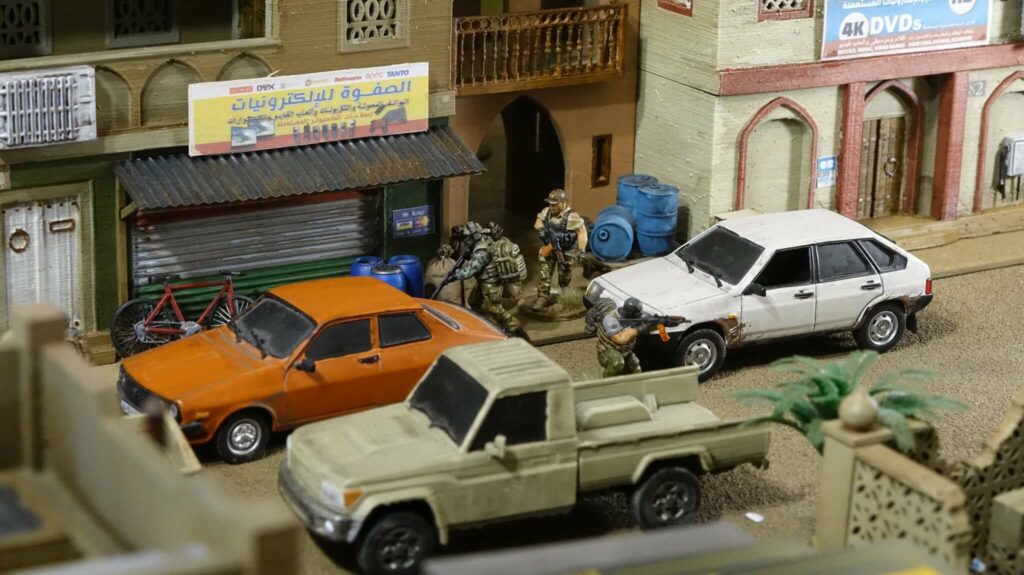
It’s interesting that you mention your friend Dan, because people often picture an inventor as someone locked in a room designing in isolation. But in most cases, inventions are the result of exchanges with others that help mature an idea into a concrete, resilient project. Were you able to rely on advice from anyone else to fine-tune Haywire?
Yes, absolutely! Even though I’ve always designed the cards and written the solo rules myself, Haywire was fed by countless exchanges with passionates and industry pros. On one hand, as editions progressed, the Haywire community grew. This allowed me to gather a wealth of valuable feedback, to the point of organizing targeted brainstorming sessions with players based on their own experiences.
On the other hand, for the third edition for instance, I had extensive conversations with military veterans. One of them, a former machine gunner, suggested creating an assistant gunner role. On paper, playing an assistant doesn’t sound very glamorous… But through brainstorming together, we managed to turn it into an exciting class to play. It adds real tactical depth and authenticity, completely breaking away from the lone-wolf “James Bond” or “Sam Fisher” cliché.
If I follow the timeline, you conceived Haywire in 2023, and just three years later, the third edition is officially coming out with a publisher. That’s a remarkably fast rise. Can you walk us through the major milestones that marked these three years of development?
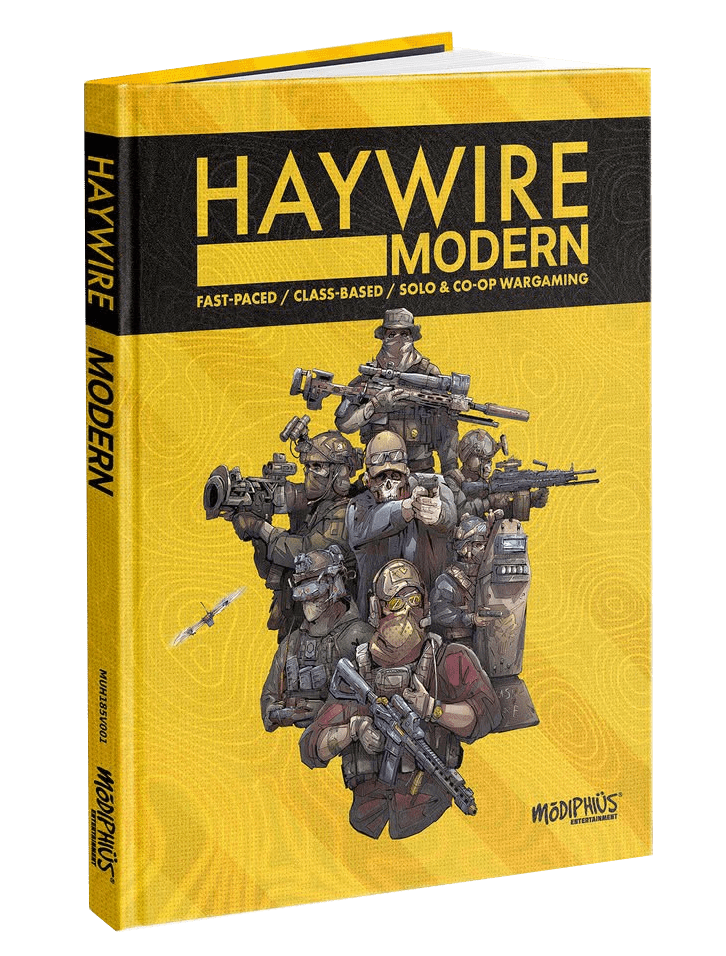
The very first version of Haywire was released in August 2023, just a few months after my son was born. Development for V1 was extremely rapid. The game picked up interest quickly: being free helped, but it was mainly the sleek visuals on the cards and in my videos that immediately caught the community’s eye. At that stage, my goal wasn’t commercial at all; it was a passion project. I used artworks found online to illustrate the rulebook, shared everything for free on my social media, and dropped the rule download link in the description of my YouTube videos.
After that initial release, I didn’t jump straight into a direct sequel for the modern setting. I branched off into a thematic spin-off: Haywire Outbreak, a zombie-survival take published in March 2024. This version kept the core mechanics of the original game while tweaking quite a few aspects to fit the genre vibe. Even though the zombie genre has an audience, this side project met slightly less success than the modern military setting, which remains my core target and that of my community. However, developing Outbreak served as a fantastic laboratory: the new rules I tested there gave me a flood of ideas to refine the main game.
Enriched by the Outbreak experience, I got back to work on the modern universe to implement those improvements. Exactly one year after the initial launch, in August 2024, I published Haywire’s second edition. That’s when the project shifted into another dimension. At the end of 2024, I was approached by publisher Modiphius Entertainment, marking the start of a whole new endeavor. That’s what kept me busy for nearly two years—from late 2024 up to now in 2026—to bring Haywire’s third edition to life!
Designing the Universe and Mechanics
Designing a paper AI automa is a delicate balancing act. As soon as it becomes too tedious to run, players disengage—managing it overhead burdens the player mentally and prevents them from enjoying the game. How did you design the enemy reaction system in Haywire to be simple to manage, sufficiently unpredictable, and capable of offering a real challenge?
That’s a great question. Developing the game relied on a staggering amount of playtesting, and balancing the AI didn’t happen overnight—it was very gradual. While the introductory faction (the insurgents) now boasts 9 distinct classes in V3, everything started out much more minimalist with just a single class for all enemies: the Fighter. That’s your basic soldier equipped with an AK-47. Since it’s the most common enemy encounter, its behavior was designed to be simple, fluid, and predictable for the player:
- Before the alert: It simply moves in a random direction.
- Once the alert is raised: It advances. If it has line of sight to one of your soldiers, it automatically fires. If not, it goes into Overwatch (on standby, ready to take an opportunity shot the moment you move).
The simplicity of its profile allows players to internalize it quickly, which is crucial for game flow. Within two games, you no longer need to keep flipping open the rulebook mid-action to check how the class works. On top of that foundation, I gradually layered other classes with more advanced behaviors, such as:
- The Sniper: Unlike others, it never appears on Threat Tokens (the anonymous threat silhouettes placed at setup). It automatically spawns on the highest building on the board.
- The RPG Soldier: A terrifying threat that immediately forces the player to adjust positioning or risk catastrophe.
This class system for enemies worked well, but I identified another major issue: the game lacked unpredictability! Once enemy locations were fully revealed, the tension dropped, and the game lost its edge. I knew players who would simply turtle in a corner, set all their soldiers to Overwatch, and passively wait for the enemy to walk into their line of fire. That wasn’t the direction I wanted for Haywire. To break that routine and maintain constant tension, I introduced two core mechanical pillars :
- Continuous Deployment: Now, once the alert is triggered, a new group of enemies spawns at the end of every round. The influx is relentless. The player can no longer afford to camp; they are forced into action, compelled to push toward the objective, complete the mission, and extract ASAP.
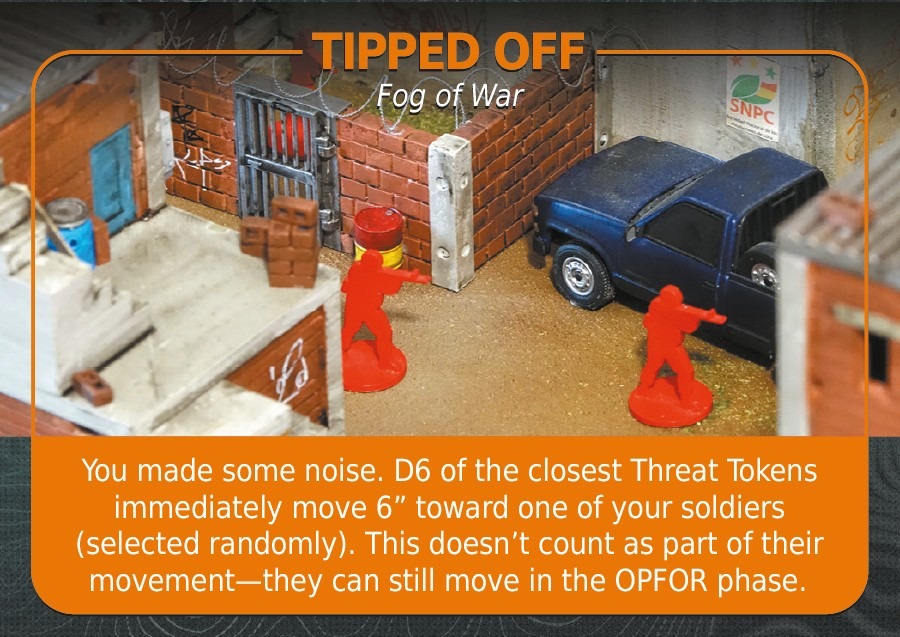
- Fog of War: To counter the AI feeling too predictable, I created an event deck. This “fog of war” introduces sudden complications that force the player to adapt constantly and rethink their strategy on the fly.
When designing a miniature-agnostic game like Haywire, but before you have the backing or leeway of a publisher, do you limit your rule design based on existing miniatures? For example, if you have an idea for a class or character for which no WYSIWYG miniature exists on the market, do you prefer to scrap it?
If I hadn’t found any miniature for a class, I probably would have adapted the idea. But I didn’t face that issue: I was fortunate enough that every class I envisioned already existed in modern 28mm scale. Well, there was one insurgent who gave me a hard time—the one with the machete! I eventually tracked down a single reference from the sculptor Blacklist Games. My goal has always been to have at least one reference to offer players who ask what miniatures I use.
Martin’s Advice
Given your success story, what advice would you give to players who want to design their own game or are currently developing one?
If I had a first piece of practical advice, it would be: design to solve a concrete problem. When I played Spectre Operations, I found it unbearable to constantly flip through a 200-page rulebook, sticking post-it notes everywhere just to look up weapon stats on page 32 or a grenade 50 pages later. For my own convenience, I decided to create paper reference cards grouping all the stats together.
Thanks to skills I acquired in 3D design school, I was able to build these cards in Photoshop so they were both hyper-practical and visually polished. At the time, no one in the community offered those kinds of tools. That personal need, transformed into a sleek and useful tool, allowed me to stand out immediately and build the foundations of my audience.
My second piece of advice is to start with selfless sharing. I never created Haywire or my previous mods for money. I’m fortunate to have a good day job that allows me to live comfortably. My primary motivation has always been the joy of sharing, interacting with the community, and seeing people have fun with my creations. That’s why the first edition of Haywire was 100% free. The second edition was published on DriveThruRPG under a “Pay What You Want” model (allowing anyone to grab it for $0).
In fact, that transition to a participatory model came from the players themselves. After the success of V1 and Outbreak, I received countless messages asking how they could support me financially. Opening that contribution option was purely a response to that community goodwill.
If you’re launching your own game project, start by distributing it for free. Don’t chase immediate profitability. Focus on an idea you are genuinely passionate about and that brings you joy. But keep in mind: the creative process is long and demanding. To see it through to the end, every hour spent on your project must remain a pleasure, never a chore.
Thank you so much, Martin, for taking the time for this interview. I also want to extend my warmest congratulations on the official release of Haywire. I’m certain your journey will inspire many readers. All that’s left is to wish you the very best for what’s ahead! And for our readers, stay tuned for more Haywire content in the coming weeks, starting with a full overview of the game!
Written by:


Buy the team a round
No ads, no paywalls, just pure passion. If our guides or deep dives helped you win your last game or discover your next favorite system, consider dropping a small tip on Ko-fi! Every pint helps keep the site independent and running.