 by
by Organizing a Marvel Crisis Protocol tournament involves far more than simply pairing players. From terrain density and table layouts to chess clock management, Longshanks integration, tournament formats, and hobby standards, this guide covers the key elements every Tournament Organizer should understand to create a smooth and enjoyable event.
Can My Club Provide the Tables?
The first question that comes up when organizing a tournament is whether you have enough equipment. Beyond the issue of space, the question of tables quickly follows.
The game is played on a 36×36″ (92x92cm) mat, which is relatively small compared to many other tabletop games. However, players also need room beside the board for a large number of cards and tokens. Make sure your tables are large enough.
Table Setup
The rules allow players to use all four sides of the table for deployment. This can matter quite a bit in certain matchups, especially since choosing table side is one of the few advantages granted by winning priority. It’s therefore a shame not to be able to use that choice to its full potential. Whenever possible, square or round tables with enough spacing between them are strongly recommended.
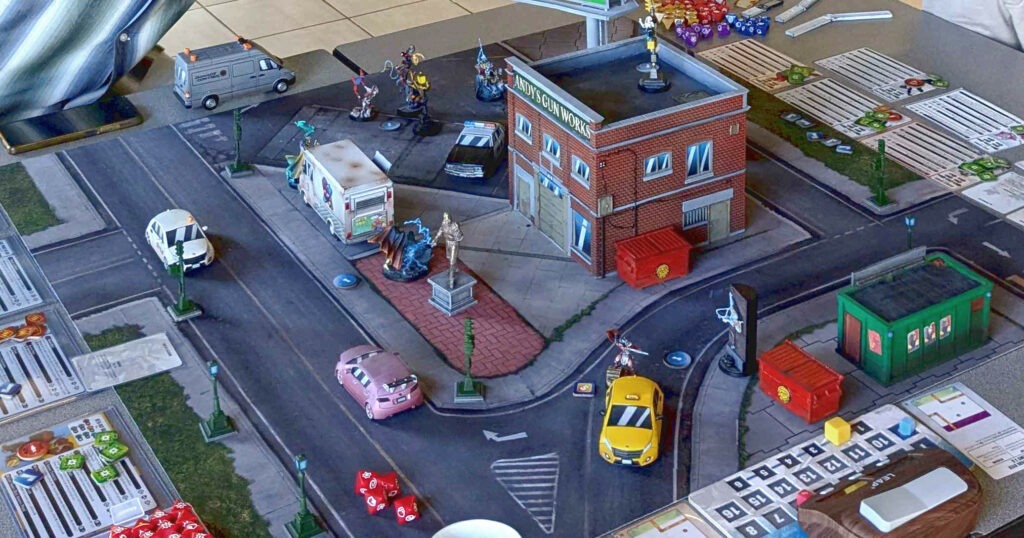
The official recommendations regarding terrain density have evolved recently. Based on both my experience and the current guidelines, I recommend aiming for around twenty terrain pieces per table. While many terrain elements play a structural role in the game (cover, line of sight, etc.), a good portion of them are simply there to block pushes and throws, or to be thrown themselves. Not every terrain piece needs to be large.
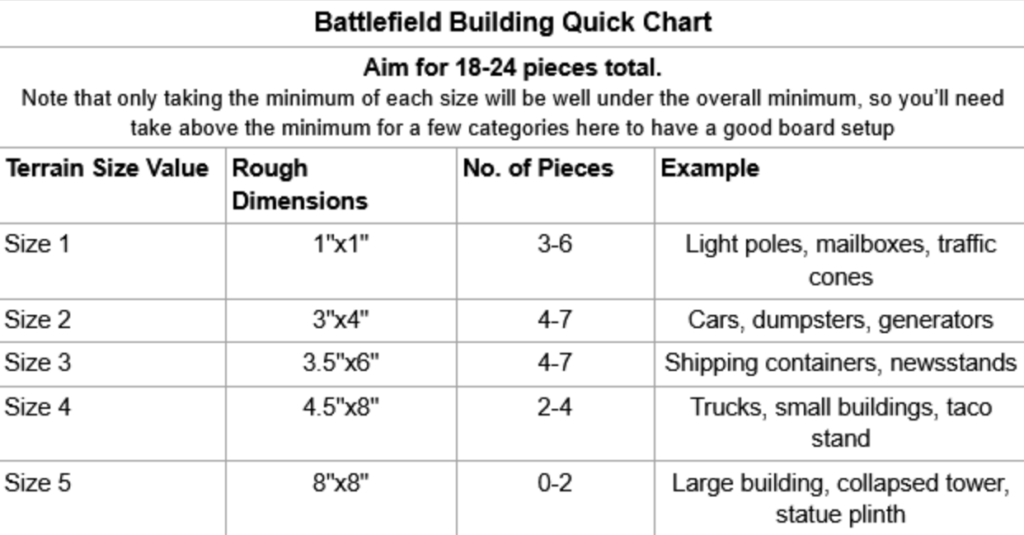
If your club is new to the game and short on terrain, you can probably get away with around fifteen pieces per table. In that case, make sure the terrain sizes are sufficiently varied. And if your tournament is open to outside players, don’t hesitate to ask them for help. Many players will gladly bring their own terrain sets.
Which Platform Should You Use?
You still occasionally see TOs running tournaments on T3. While Table Top Tournament served the community brilliantly for decades, its interface and business model now feel outdated. More importantly, an MCP tournament hosted on T3 will simply be invisible to most of the community. That’s because MCP events are now organized on Longshanks.

Besides giving your event maximum visibility, this platform will help you manage rounds, pairings, lists, and scoring. Players can enter their results directly on the website (although you may want to check the 4G/5G coverage if you’re hosting your tournament in a basement). The site will then automatically generate pairings based on the constraints you’ve set beforehand. The platform is entirely free, and the paid features are completely optional for both organizers and players.
I won’t go into all of Longshanks’ features here — that would require an article of its own. One important thing to remember, however, is to properly close your tournament once it’s finished. Otherwise, it will remain permanently marked as “in progress” in your players’ menus.
List Format
Lists are generally created using an army builder such as Jarvis’ Protocol. These builders can export your lists in “MCT” format. It is highly recommended to use this format when uploading lists to Longshanks. The site understands the MCT language, allowing it to extract list data and automatically pre-fill match sheets. Longshanks can then compile statistics for both your tournament and all recorded games worldwide! It also allows organizers to quickly retrieve a list and upload it into Jarvis’ Protocol to verify its legality. (Jarvis can determine whether or not a list is valid depending on the format being played.)
What Tournament Format Should You Choose?
Like most miniature games, the preferred system is the Swiss format. However, if you’re running a small local event (6 players) or a team tournament (6 teams), a round-robin format (everyone plays everyone) may be the better choice. It avoids rematches and generally produces a more meaningful ranking.
If you choose a Swiss format, Longshanks is, in my opinion, configured by default with the fairest system available. First comes randomness: in round one, you can be paired against any other participant at random. Organizers also have the option to prevent players from the same local community from facing each other in the first round (which is why creating communities on Longshanks is useful). For subsequent rounds, you can face any player with the same number of wins as you. That’s why tournaments with a player count equal to a power of two (2, 4, 16, 32, etc.) are ideal. If there’s an odd number of players at a given win level, one of them will randomly be paired down against a player with one fewer win. This can sometimes create slightly awkward situations. Additionally, if the player count is not a power of two, the number of rounds required to determine a winner becomes unpredictable.
Timing?
A successful tournament often comes down to good time management. However, when first discovering the game in a competitive setting, it can be difficult to estimate how long games will last.
The game is relatively fast-paced, and it’s not uncommon for a match to finish in under an hour. That said, the standard reference time for a tournament game is 1 hour and 30 minutes. The key thing to keep in mind is that a game failing to reach its conclusion because of the round timer is a real issue. Some affiliations specialize in scoring very quickly early in the game, while others need a few turns to set up their game plan and therefore fall behind on points initially. Not being able to finish the game is therefore a major source of frustration and perceived unfairness.
For these reasons, the chess clock has been adopted by the vast majority of tournament organizers. In practice, organizers allocate a set amount of time for each player to perform their activations. Most of the time, this system prevents any overrun, which is much more comfortable for organizers. But more importantly, it is also fairer for players. Only the player who excessively used their thinking time will be penalized if time runs out. However, there are several ways to use a chess clock: the Death Clock or the Soft Clock.
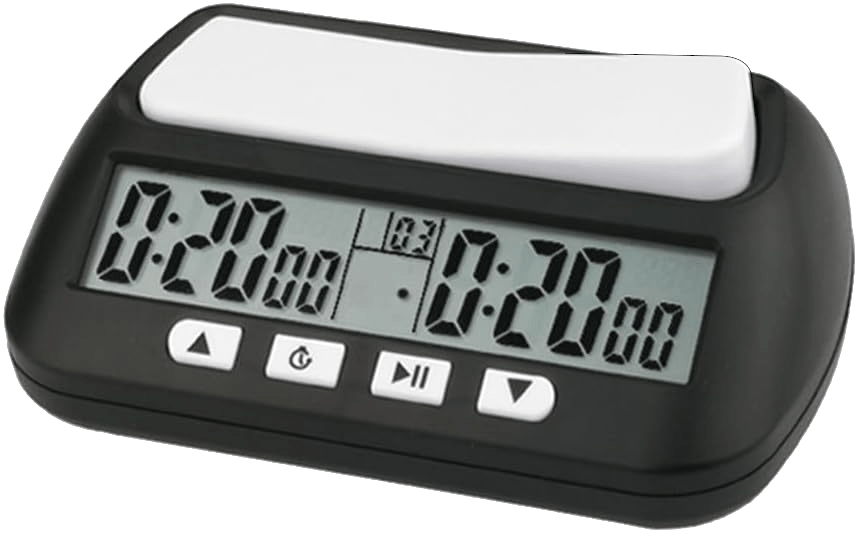
The Death Clock
The Death Clock is the system traditionally used in chess: when a player’s timer reaches zero, they lose the game. It’s a fairly harsh and potentially frustrating system, especially for someone who was otherwise in a dominant winning position when their time expired. Additionally, this kind of time management can encourage unhealthy behaviors, such as abusive clock switching after every dice roll or brief moment of hesitation.
The Soft Clock
To avoid damaging the atmosphere around competitive tables, the system gradually evolved into the Soft Clock. Under this system, a player whose timer reaches zero no longer automatically loses the game. Instead, they simply lose the ability to activate their characters. They still retain the right to defend themselves and use their reactive powers and tactics cards. While this still usually results in a loss, it gives players a chance to hold onto victory if they built up a sufficient lead, or if their opponent also runs out of time later on. The downside for organizers is that games may still exceed the combined player clock time, which is why it’s important to leave yourself some buffer time in the schedule.
How Much Time Should You Allocate Per Game?
Once you’ve decided to use a chess clock, you still need to determine how the time will be distributed. The worst-case scenario with a chess clock system is having the overall round timer end the game while both players still have time remaining on their personal clocks. To avoid this, round times need to be properly calibrated. If we assume that a game should last around 1h30, the logical approach would be to give each player 45 minutes. The remaining question is what to do with T0 (crisis selection, roster discussion, etc.), deployment, and the phases between rounds (cleanup phase and power phase).
If your schedule allows for it, you can absolutely leave these phases on the shared round clock. In that case, you should probably allocate around 20 minutes for T0 + deployment, and another 15 minutes for inter-round phases. However, if you’re concerned about potential abuse, you can instead require deployment and between-round phases to be played on the players’ individual clocks. In that setup, the cleanup phase is performed on the clock of the player who made the last activation of the round, while the power phase is handled on the clock of the player making the first activation of the next round. In that case, you can consider giving 55 minutes per player, or even 60 minutes if deployment is also timed. Under this system, pausing the chess clock becomes forbidden except in the event of judge intervention. This approach gives organizers even greater control over the event schedule.
Even so, make sure to leave enough time between rounds for players to report their games on Longshanks, debrief, use the restroom, grab a drink, move their miniatures around, and most importantly, deal with unexpected delays.
One Day or Two?
Once you’ve determined the pace of the day, you can decide on the overall structure of your tournament.
In my opinion, a one-day tournament is still the ideal format when starting out. If your event hosts 8 players, you’ll have a single winner after 3 games. If you’re expecting between 8 and 16 players, you can still comfortably keep the event to a single day. With a bit of discipline in your scheduling, fitting in 4 rounds is entirely manageable. It also makes travel much easier for participants.
If you’re aiming for more than 16 players, you’ll need to move up to 5 rounds. While some organizers do run five games in a single day, I wouldn’t recommend it — especially if you’re new to organizing tournaments. It creates a pace that’s uncomfortable for both players and TOs alike. At that point, you should seriously consider moving to a two-day format.
That said, a two-day event comes with additional constraints. At a minimum, you’ll need to plan for an extra meal, and venue costs may also increase, which will naturally impact the entry fee. Players traveling from outside your local community will also need accommodation and another meal. All of these factors can discourage attendance. Players who happily traveled for your one-day events may be less willing to commit to a full weekend. Especially since, if your tournament has fewer than 32 players, it’s entirely possible to already have a winner by the fourth round. That situation can feel disappointing for players who paid for a two-day tournament only to play four truly meaningful games. Events capable of drawing 32 players are still relatively rare in France, which is why I’d recommend sticking to one-day tournaments at first.
What About Hobby Standards?
Depending on your personal background in miniature gaming, your approach to the hobby aspect can vary greatly. In general, fully painted rosters are required at most MCP tournaments. Compared to large-scale army games, the number of miniatures in an MCP roster is tiny, so the effort remains quite reasonable. It’s also worth remembering that miniature games are played by two people, and presenting your opponent with a painted force is simply a matter of respect. That said, no universal rule exists, and the final decision always rests with the TO.
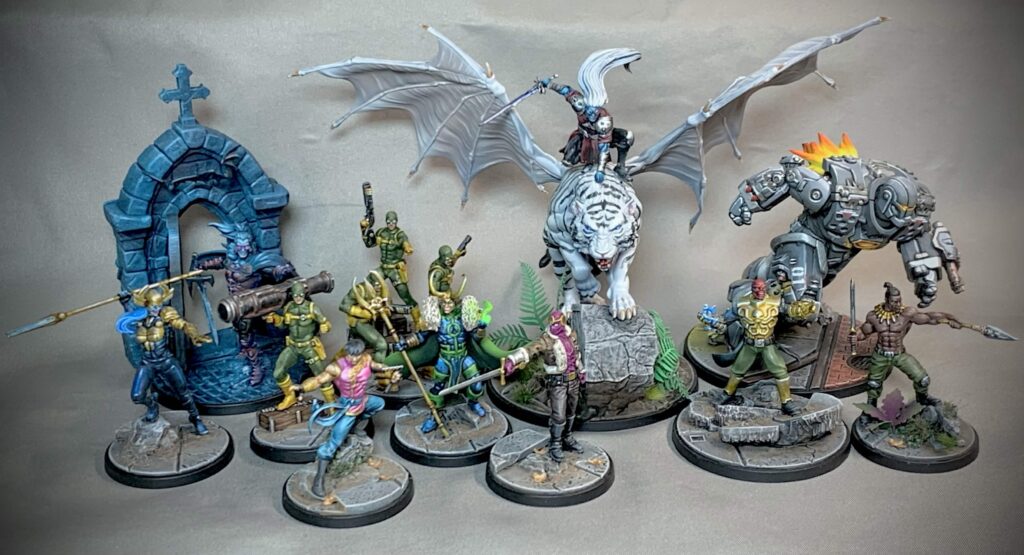
As for 3D-printed miniatures, the community tends to be much stricter on this topic than many others. However, organizers generally allow some flexibility, usually somewhere between 20% and 50% of a roster being made up of proxies.
Find Marvel Crisis Protocol players
Join your country’s MCP Discord community and connect with players near you.
 Join France
 The Tournament Rules Pack
To wrap things up, here’s one final piece of advice: whether it’s your proxy policy, painting requirements, time management rules, list submission deadlines, or anything else, it’s always a good idea to write a proper rules pack so players know exactly what they’re signing up for.
If you would like to dive deeper into how to organize your tournament in practice, I invite you to read our article on the subject:
Written by:


Stay tuned
And never miss an article again! Join our Discord to get notified whenever we publish something new. You can even choose which games you want to receive notifications for!