 by
by Have you recently started playing Star Wars: Legion? Have you played a few games and are now looking to build your own battlefield? But what should you pay attention to when creating your first table? In this article, I share a few tips to quickly put together a versatile and thematic gaming table.
What does Star Wars Legion require in terms of table setup?
- Star Wars Legion is played on a table of approximately 180×90 cm (1,000-point format) or on a table of around 90×90 cm (600-point format).
- Terrain should cover roughly 30% of the play area. This is not mandatory, but it is strongly recommended.
- An ideal Star Wars Legion table uses several types of terrain: line-of-sight blockers, elements that provide cover (heavy or light), impassable terrain, difficult terrain, or special effect zones. For your first table, I suggest focusing on three key functions:
- Blocking line of sight
- Providing cover
- Adding elevation
- And of course, it’s best to prioritize Star Wars–themed terrain! 😄
Versatility as the main objective
My first piece of advice is to focus on making your table as versatile as possible, whether in terms of table type, environment, or terrain selection.
The gaming mat
First of all, a gaming mat is preferable to a table built from a wooden board. The main advantage of a mat is that it’s easy to store and transport. And you will very likely need to transport your table when attending tournaments. Indeed, very few tournament organizers can provide all the tables needed for an event, and they often rely on participants to help out. Choosing a mat therefore increases the chances of tournaments being organized in your area.
The environment
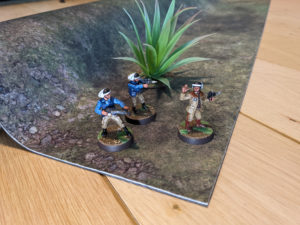
Secondly, choose a versatile environment, especially if you play several wargames. A volcanic or heavily urban planet will fit fewer games than a temperate forest landscape. A more “neutral” mat can be used for Star Wars of course, but also for A Song of Ice and Fire, Malifaux or Bolt Action to name a few.
The terrain pieces

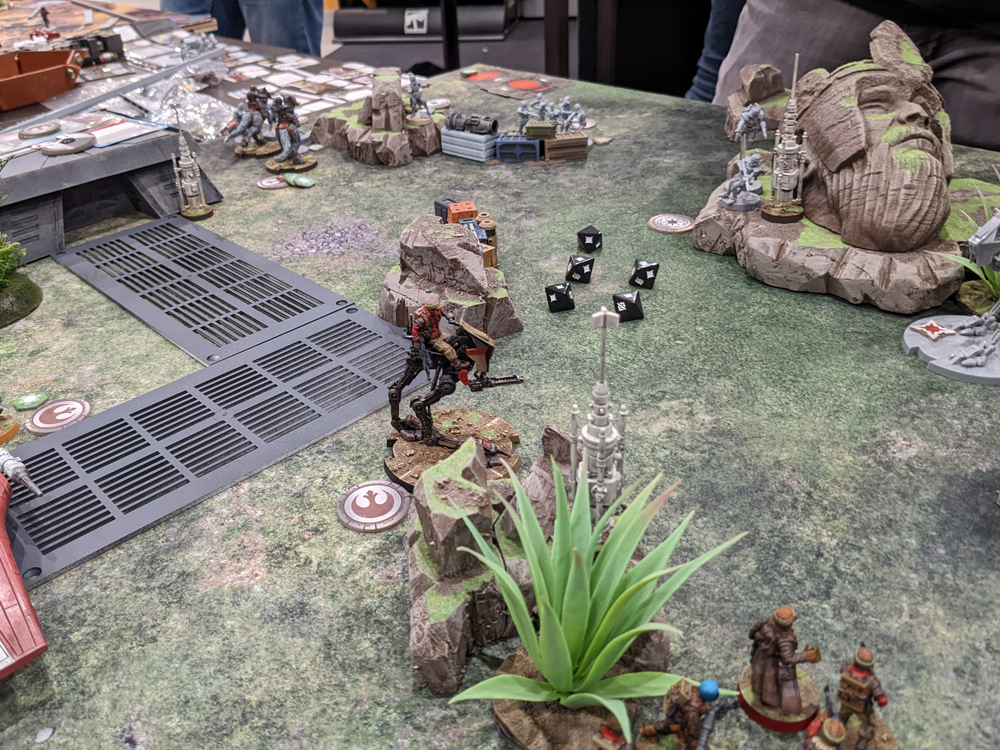
Finally, I strongly recommend prioritizing terrain that represents natural landscapes. Nature is timeless and offers great flexibility for wargames set in different eras. And even if you exclusively play Star Wars, natural terrain can easily represent several planets, such as Kashyyyk or Endor.
An affordable way to quickly and efficiently cover your table is to build rock formations. Depending on their size, rocks can fulfill all three essential functions:
- provide heavy cover
- block line of sight
- add verticality to your table
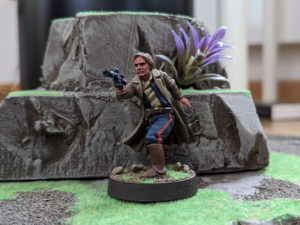
Star Wars terrain must be eye-catching
By following the advice above, you’ll end up with a functional and versatile table… but one that lacks soul. Something will still be missing to give your table a true Star Wars identity.
If, like me, your goal is to create a thematic table that any fan will recognize instantly (“This is a Star Wars table!”), then the next tip will be useful. To explain it properly, I need to mention a cinematic trick used by Alfred Hitchcock in The Birds (1963). For those who haven’t seen the film yet (what are you waiting for?), it tells the story of birds attacking the inhabitants of a small island. Filming large numbers of birds at once was technically very challenging, so the master of suspense relied on several clever tricks to simulate massive flocks.
The trick I want to focus on appears in the school scene. Throughout the sequence, crows slowly and calmly gather around a school building. Hitchcock builds tension by gradually adding more and more birds to each shot, creating a chilling effect:
Among all the birds on screen, only a few are real. Because the living birds move and draw the viewer’s attention, our brain assumes that all the other birds in the frame could move as well—even though they are actually fake.
This trick works just as well for your Legion table. If the elements that immediately catch the eye clearly belong to the Star Wars universe, then your brain will automatically accept that the rest of the terrain belongs to that universe too. This may sound obvious, yet many tables unfortunately do the opposite!
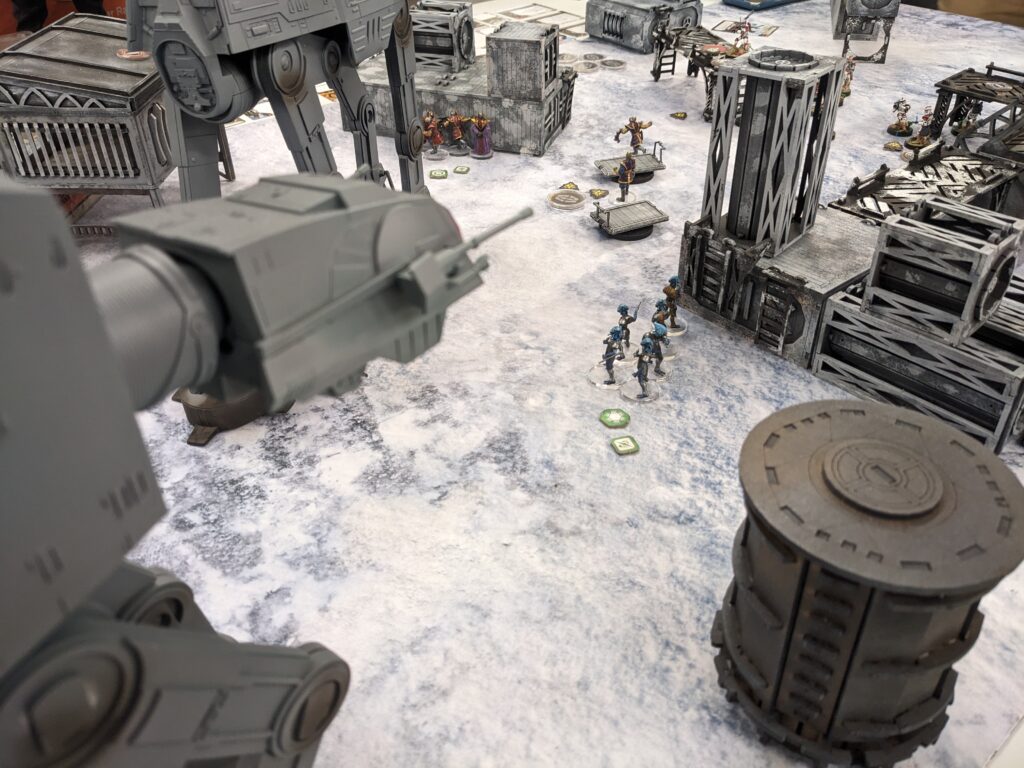
When choosing Star Wars terrain, it’s therefore best to start by creating or purchasing the largest, most imposing elements from Star Wars first, and only then focus on the smaller pieces.
Need advice building your army list?
Join your country’s Star Wars: Legion Discord community and get answers to your questions.
 Join international
 Final thoughts
To sum up, I believe it’s more effective to build a table where 70% of the terrain is generic and versatile, and 30% is specific to your wargame’s theme. This way, whenever you switch games or planets, you only need to replace that 30%. As a bonus, you also reduce the amount of storage space needed for your terrain!
Written by:


Stay tuned
And never miss an article again! Join our Discord to get notified whenever we publish something new. You can even choose which games you want to receive notifications for!