
 by
by In the Star Wars: Legion community, some players stand out — not just for their skill, but for their passion. These are the people who go beyond winning games: they share their knowledge generously, organize massive tournaments just to bring joy to others, and contribute to the community in ways that few can match. They are rare, and I was fortunate enough to sit down with one of them: Andrew Terrell, UK champion, organizer of the Chopper Base Open (previously known as the Milton Keynes Grand Tournament), and host of the That’s No Moon podcast. In this interview, Andrew shares his journey in Legion and offers advice for both new and experienced players looking to improve.
The player, the podcaster and the tournament organizer

Jack Brussell: Hello Andrew ! Thank you for taking the time to make this interview happen. For those who doesn’t know you, could you introduce yourself and give us an overview of your achievements in Star Wars: Legion?
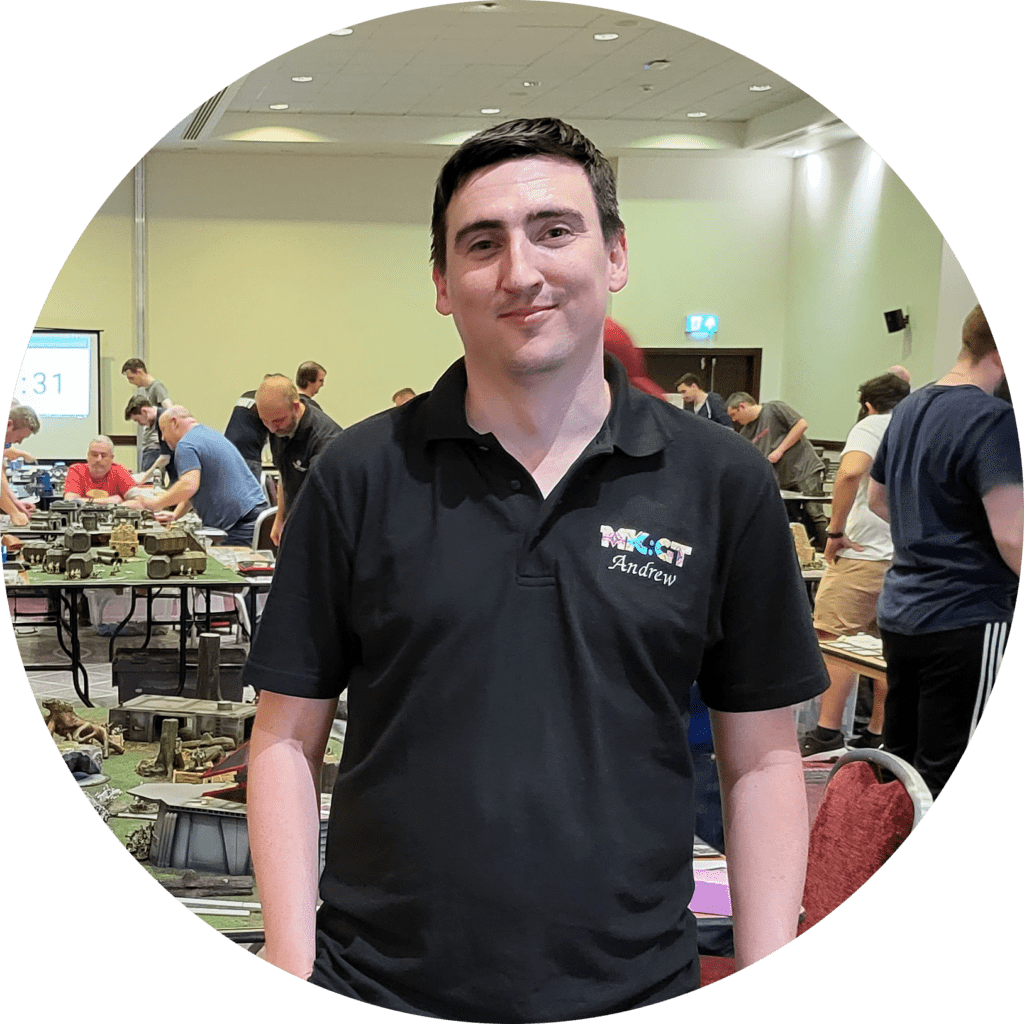
Andrew Terrell: I’m Andrew Terrell (born 1987) but I also go by the name AJST online. I’m from the UK, living just outside of Cambridge. I’m the tournament organiser for the Chopper Base Open (used to be Milton Keynes GT) as well as the World Team Championship. With my friends Olly Dier and Cockles Faulkner, I’m also a host of the That’s no moon, a Star Wars Legion podcast.
My achievements in Legion range from winning the UK Championship (UK Games Expo) twice to finishing 4th at the World’s Championship in 2023, my best achievement so far. Let’s not talk about the following year at the World’s where I finished 61st (laughter). Last year was much better, as I finished 10th.
First steps
Can you explain how it all started for you? When did you first discover wargames, and through which ones ?
I guess I discovered wargames when I was really young (about 8 or 9 years old) with Warhammer Fantasy. My first miniatures were Goblins. I bought a box of spearmen and archers, like 5-10 of each. That got me interested in playing Orcs, buying more miniatures and playing bigger armies. Afterwards I discovered 40k and during the next few years, I played every minute I could. I was living, breathing wargames and played often. I hated painting though.
When I reached 18 years old and went off to University, I found alcohol and women.😅Wargaming then took a step back and didn’t play it anymore !
But eventually wargaming struck back, right ? How did you end up playing Star Wars: Legion?
Yes absolutely, I got back into the miniatures with Star Wars: X-Wing, literally two weeks before second edition dropped. It’s a great tactical game and the pre-painted miniatures were a pain relief for me.😮💨 Shortly after, Star Wars: Legion was announced. This one looked like a ground version of X-Wing, much more like Warhammer. I already loved Star Wars, so I was naturally hooked by this game.
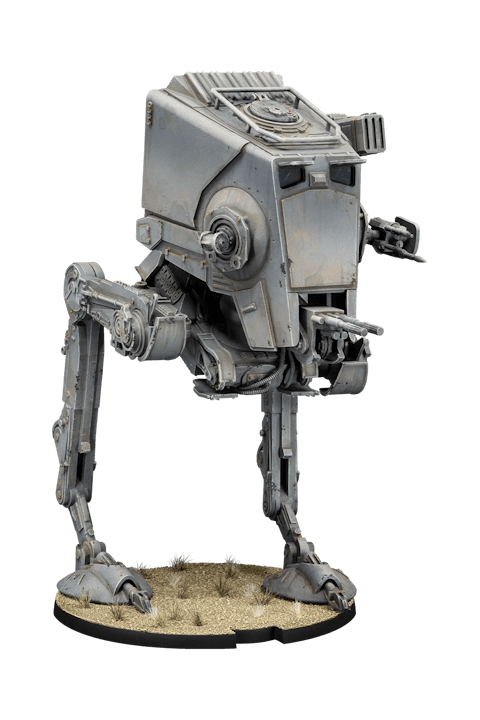
So I’ve put all the effort into playing it. I had a gamestore nearby and I did demo nights where I stood literally there waiting for people to ask for a demo. I put an AT-ST on the table, and people were like” Waw, that’s cool. What’s that game ? Can I play ?” “Yeah yeah, play with my stuff it’s not an issue” I let them enjoy the game and teach them how to play. I gave up my evenings not playing the game but attracting new players. It was worth it because if you get more players, you have more opponents and then more players to play with.
Attracting new players to this wonderful game has been a challenge in many countries, including the UK in your case and Belgium in mine. Building a community can be an uphill battle, and not every attempt succeeds. So let me ask you a tricky question. Why did you choose Legion rather than Warhammer 40,000, which is far more popular and much easier to access in terms of finding shops, players and tournaments? Why choose the more challenging path of committing to a lesser-known game?
Simply put: the gameplay. I like the alternate activations in Star Wars: Legion. It’s a mechanic that you find in A Song of Ice and Fire or Bolt Action too, both games I enjoyed playing for the same reason. So when it comes to W40k, although I love its lore and reading the books, I don’t enjoy its mechanics. Yes, I could buy an army, play it and I could guarantee any day of the week, anytime of the day, a game. As you said, there are stores nearby and you’ve always got players. It’s so easy to get into. But at the end of the day, enjoying the game you play is much more important. 😊
Need advice building your army list?
Join your country’s Star Wars: Legion Discord community and get answers to your questions.
 Join Germany
 From Padawan to Jedi
Do you remember the moment when you started chaining wins together and really became a strong player? What was the turning point that took you from beginner to intermediate, and then from intermediate to top-level player?
For me, the turning point from beginner to intermediate happened when I went to my first tournament. I was performing well locally, so I was quite confident — but I ended up chaining losses at that event. That’s when I realized I had to move from “playing what I like” to “playing what is strong”. And playing the meta isn’t necessarily playing what you enjoy the most.
Along with that realization came another one: owning a single copy of each unit wasn’t enough. I had to buy multiple copies of the same units. This whole process is a hard pill to swallow if you want to become a great player — which is what I wanted to be.
The transition from intermediate to top-level play happened when I started blogging and writing battle reports. I began doing deep dives into my tactics and highlighting my mistakes. Other players — who at the time I considered top players — would comment on my posts and give me advice, offering ideas that helped me refine my tactics. I would then test those ideas at my local game store. Over time, I saw my results slowly improve, tournament after tournament.
Eventually, beginners will become average players after some practice. What isn’t guaranteed, however, is progressing from an intermediate player to a top-level competitor. What advice would you give to experienced players who struggle to improve their tournament results and feel stuck in their tactical approach to the game?
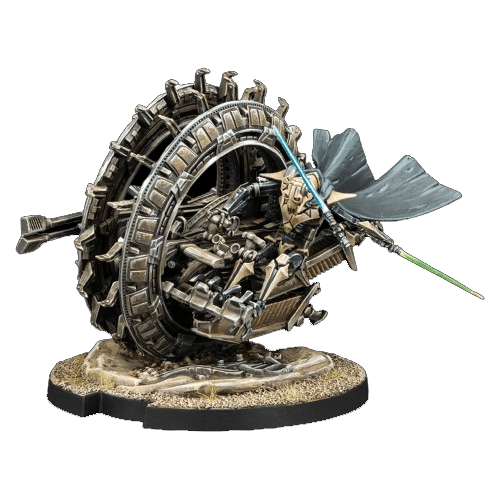
Don’t be afraid to reach out to people. I was struggling last year trying to make a droids list work before going to Worlds. I knew I wanted to take Grievous, and I tried different things — first with Dooku, then with Asajj — but I couldn’t settle on something that performed well.
I ended up messaging UK and US players, asking how they would use the list, and more importantly, why they would use it that way. That’s the most important question. Not knowing how a list works and how its units synergize is what separates the intermediate player from the top player.
For example, why is everyone taking Grievous’ TSMEU-6 Wheel Bike at the moment? The reason is that he can hit hard on turn two (or sometimes even turn one, depending on the mission). He can impact a lot of units through suppression, which means they can’t score objectives, can’t shoot him and move — or can’t do either if they panic.
If you had to rank the following aspects of the game from most important to least important, how would you order them:
| Positionning | Army list | Activation economy |
| Command phase | Attrition | Objectives |
| Deployment | Adaptability | Plan |
The most important thing above all else is (1) knowing your list: its strengths and its weaknesses. You can bring a list that isn’t top meta, but you need a clear answer for what is currently meta. Repetition and knowing your army inside out matter more than anything else.
This naturally leads to (2) objectives and deployment, which go hand in hand. You need to know how you are going to play every mission with every unit you have. For example, if I’m playing Intercept and I have both of my tanks with transport capacity, I already know one is going left and the other right. I don’t need to think about it again — it’s automatic. Why? Because from experience, I know I need space for both of them. When you play large units that take up a lot of space, you learn from your mistakes. You want to reach a specific spot on the map, but you can’t because you deployed another unit in the way earlier in the turn. That’s why (3) having a pre-made plan, pre-measuring, and knowing the distances your units can reach is so important.
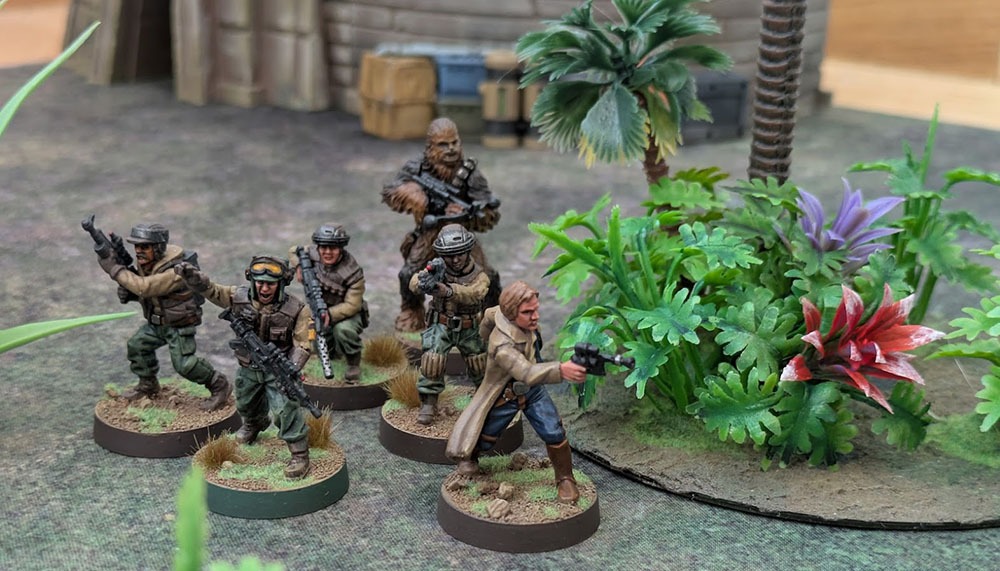
Once the game starts and you begin to execute that plan, then planning naturally leads into (4) positioning. Positioning is crucial: you need to assess what you have, what range options are available, and how you adapt to your opponent. Facing an army full of mega squads or a list with 15–16 activations is not the same approach. (5) Activation economy, attrition, and the command phase then fall naturally into place at the end.
Do you think that becoming a great player requires dedicating yourself to a single wargame, or is it possible to excel at several at once?
Obviously, focusing on a single wargame helps you master every subtle underlining of the rules. However, I believe there is a significant crossover between systems. You can definitely be good at more than one game at a time because strategy, pre-planning, and an innate understanding of mechanics carry over from one game to the next. My personal experience reflects this: I don’t play A Song of Ice and Fire very often, yet in the two tournaments I’ve attended, I remained undefeated. Which tends to support my feeling that core tactical skills are somewhat universal.
The performance of English players
English players have been performing particularly well in Star Wars: Legion in recent years, with a World Team Championship title in 2025 and frequent top-10 finishes at major events. The table below highlights some of their achievements:
| Event name | Results |
|---|---|
| SWL World 2023 | Lyla Claire 2nd, Andrew Terrell 4th, Oliver Dier 5th (3 UK players in the top 8, 2 US only) |
| SWL World 2024 | Oliver Dier Winner (Lyla did not participate) |
| SWL World 2025 | Oliver Dier 9th, Andrew Terrell 10th (Lyla did not participate) |
| SWL World Team Championship 2025 | UK winner (with Lyla Claire and Oliver Dier in the team), Andrew TO. |
What do you think makes the UK scene so strong compared to other countries?
I think it’s a combination of factors. First, we have a strong wargaming culture in the UK, with major companies like Games Workshop, Warlord, Mantic and Steamforged having a very visible presence. That encourages more people to get involved and develop their skills. We also have many smaller, local games that attract dedicated players, which helps build a deep player base.
Another factor is simply experience earned by competing internationally, perhaps more than players from other countries. Being exposed to different playstyles and tournament environments helps developing a deeper understanding of the game. I travel for this hobby because I want to be challenged. For example, I went to Poland in September 2025 for the Warsaw GT (where I finished 6th out of 72) because I knew they had a strong player pool. France also has a great one, but hadn’t the chance to participate to one of their events yet. But I’m looking for it. They won the first Worlds Team Championship after all.
The content creator
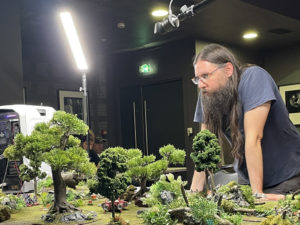
You also had a writing journey alongside your competitive career. You wrote for Fifth Trooper between 2022 and 2024, with a very tactical approach: breaking down lists, analyzing turn zero, making turn-by-turn decisions, and providing an organizer’s perspective on table setup. Looking back, what did writing teach you most about the game itself?
Writing mainly taught me to understand why I won or lost my games. Putting my decisions on paper forced me to structure my thinking: explaining a list, a turn zero, or an activation made me question whether a choice was truly justified or just instinctive. This process of analysis is what helped me improve the most as a player.
In your opinion, what types of tactical content are most lacking in wargaming today ?
I think what’s most missing in wargaming today is tactical content that goes beyond the results. High-performing lists are easy to find, but very few articles explain the trade-offs, the mistakes avoided, or the key decisions made during a game. In my opinion a battle report only becomes truly valuable when it details the reasoning behind every important choice, rather than just describing what happened.
The same applies to the organizer’s perspective. Table setup, terrain, and objectives have a huge impact on gameplay, yet this topic is rarely explored in depth. Explaining why a table is balanced—or not—is, in my view, just as instructive as analyzing a list.
What advice would you give to experienced players who are hesitant to share and explain their own gameplay choices?
To experienced players who are hesitant to create content, I would say one simple thing: teaching is the best way to improve. Sharing your ideas makes your opponents better, but it also forces you to sharpen your own understanding of the game. If your goal is to keep improving, explaining your choices—even imperfectly—is an excellent way to push yourself further.
That brings our interview to a close. Thank you so much for your time and insights, Andrew. We still have your work as a tournament organizer to discuss — just as impressive as your Legion achievements — but we’ll save that for another article !
For our readers, stay tuned for the next installment. In the meantime, enjoy our other posts on Critical Hit — our specialty? Timeless content about wargames beyond Games Workshop.
Written by :

Jack Brussell, the driving force behind Critical Hit
I discovered miniature games in 2020 through Star Wars: Legion, and soon felt the urge to share insights and strategies about the game with others. That’s how Critical Hit was born in January 2022. What began as a one-man venture into Legion became a true team effort in 2025: As new writers joined the project and I explored more wargames myself, the site expanded to cover many more miniature games, reaching an ever-growing international audience.
 Buy him a coffee
 Explore our coverage by game


Support an independent wargaming website
Critical Hit is a volunteer-driven project, but it still comes with real costs. If the site helps you in your hobby, please consider supporting us on Ko-Fi. Every contribution, no matter how small, means a lot to us and genuinely helps us keep the project going.
 Support us on Ko-fi