
 by
by Can wargaming claim a role as an educational tool? It is true that games like Bolt Action or Pillage often oscillate between documentary rigor and historical anachronisms. But doesn’t the real stake of these historical wargames go beyond simple accuracy? How do we handle the tension between entertainment and memory—between a passion for military hardware and the responsibility toward the narratives of the past? How does a player navigate the intersection of ludic pleasure, ideology, and the gaze of society?
A historical context: reconstituting or playing with History?
Unlike miniature games that exploit fantasy settings, historical games are rooted in reality. This reality is anchored in the collective unconscious of players, given that History is taught to students throughout their schooling. We all share a common cultural foundation in this field.
One issue I’ve seen raised by Bolt Action players is the general public’s lack of historical culture when confronted with a game. It is clear that while History is taught in school, popular culture—through video games, movies, and series—often offers a reimagining of historical events. These entertainments are rarely burdened by realism; they seek to provide a narrative that serves their story, while historical reconstruction or accuracy takes a back seat.
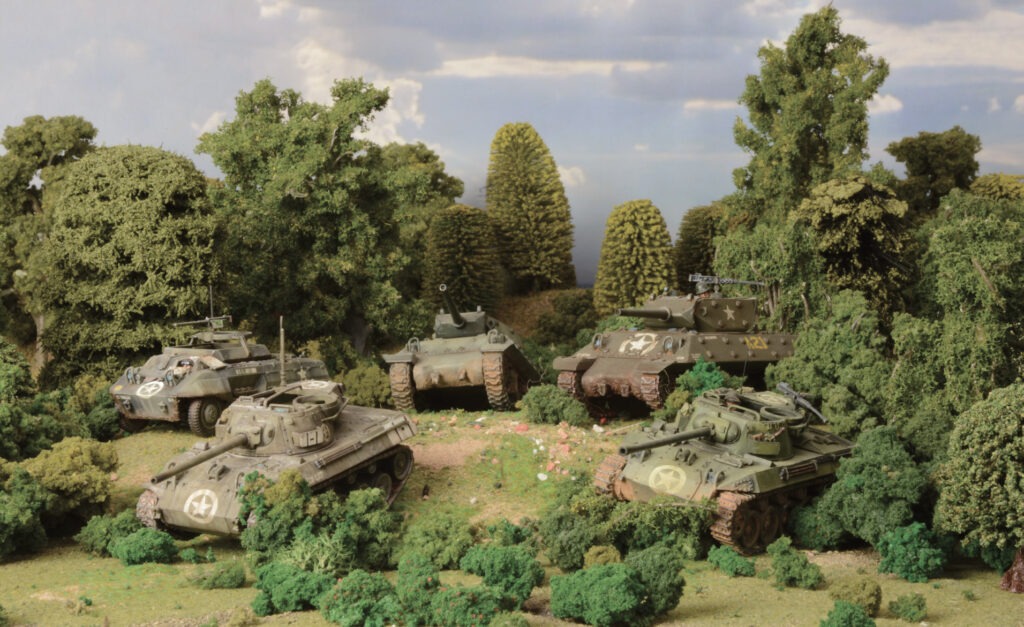
It is important to clarify that Bolt Action remains, above all, a game and does not claim to be a rigorous historical simulation of a WWII battle. In many respects, particularly regarding scale or equipment precision, absolute accuracy is not the primary goal, even though the publisher pays close attention to these details.
Furthermore, players themselves often make historical errors because the enjoyment of the game comes first. It would be a shame to forbid certain scenarios just because one lacks miniatures with perfectly period-accurate equipment or uniforms.
However, it is worth noting that a portion of the community spends a considerable amount of time attempting to faithfully reproduce historical shades for infantry uniforms or camouflage patterns for vehicles.
Clearly, there are many historically themed wargames with the ambition of “reconstituting” history. This was notably the case with the Napoleonic games found in hobby shops back in the 80s.
Is historical wargaming an effective educational tool?
This question is frequently addressed by secondary school history teachers. Articles often discuss video games that use a historical context, such as Civilization or the Assassin’s Creed series, which reconstruct cities or countries based (more or less) on archaeological knowledge of the time. But what about miniature wargames?
Most historical wargamers are naturally inclined to seek out historical sources—not just to paint their armies, but also to research:
- Equipment
- Vehicles
- Battles
- Historical facts
Miniature wargaming thus becomes a pretext for learning history. This is true for players of Pillage as well as the Bolt Action players I interviewed.
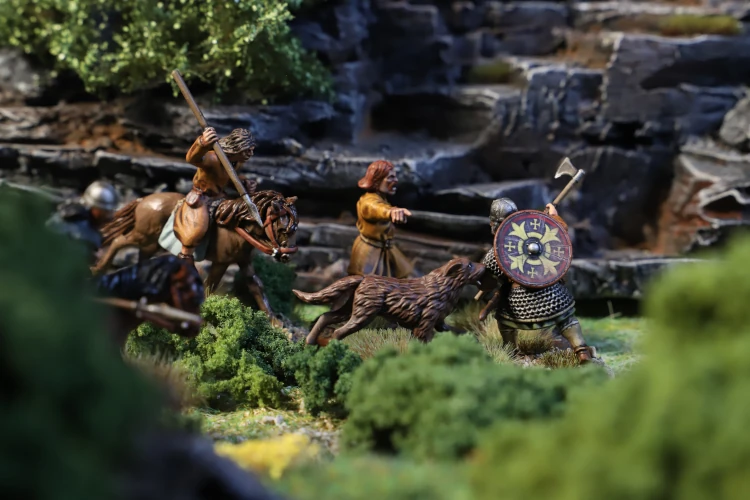
I reached out to the community of Pillage (published by Noodle), a game set in the Dark Ages featuring village raids by various peoples. It appears that, like many historical wargamers, the process of designing scenarios and choosing paint schemes incentivizes them to conduct historical research.
Different era, same reaction: Bolt Action players consult historical sources to enhance their gaming experience. From choosing the right paint shades to researching historical facts or period testimonies, the emphasis is on a desire to reconstruct a past that isn’t just a fantasy, but is as credible as possible.
We can say that the value-added of historical games is the staging of history: a duty of memory, a source of historical culture, and an educational tool for everyone.
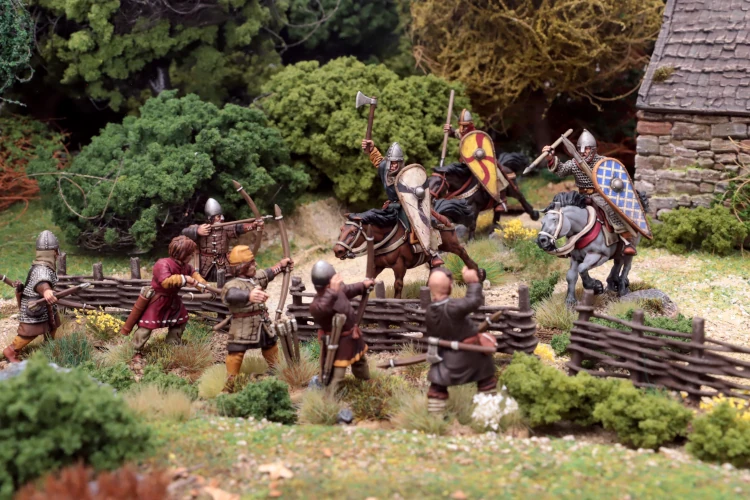
We could also see historical wargames as a way to make the past “live.” Through a playful, modern, and didactic lens, the miniature wargame becomes a cultural medium—a source of entertainment, sharing, and a way to bring a community together around a common hobby.
What could be better than learning while having fun? What is more exciting than digging for historical facts to paint a miniature, create a scenario, or ensure that a piece of scenery isn’t anachronistic?
Between historical rigor and ludic anachronisms
The Medieval period is particularly suited to historical gaming. By consulting the Pillage community, I learned that miniature publishers sometimes make errors regarding soldier equipment due to a lack of historical expertise—sometimes resulting in anachronistic weapons or clothing. Some history-buff players identify these errors as a major issue in their hobby, even if the game is “only” a simulation and not intended to be a perfect reconstruction of real battles.
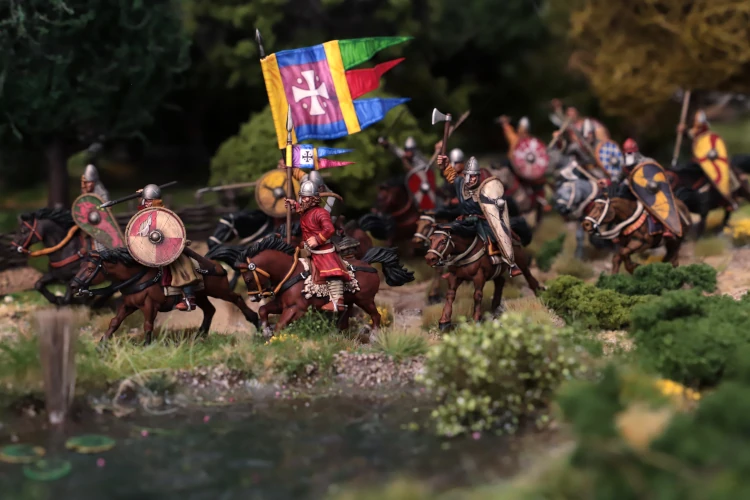
The game Pillage, for example, explores the 9th to 11th centuries—the “Dark Ages”—a period where archaeological research remains specialized and relatively obscure. These centuries are rarely depicted in the media, except through Viking series (which often offer a romanticized and inaccurate vision of people who, in their time, made the world tremble).
The benefits of playing with History
To play with History is not to betray it; it is to make it live. The historical wargame acts as a powerful cultural vector: it pushes us to open books, understand contexts, and realize that behind every miniature lies a human reality that was often tragic. It is a hobby that puts war into perspective, far removed from any glorification.
I can only invite you to try the experience—for the richness of the mechanics, for the thrill of historical research, but above all for this unique bond it weaves with the past. More than a game, it is a playful tribute and a formidable tool for transmission between generations.
Choosing an army: Between game performance and historical heritage
Is it “neutral” to play as the Germans in a WWII game?
This is a valid question I’ve asked myself. Having chosen the SS as my first army, the choice wasn’t necessarily obvious to me as a player. However, the equipment and tactical elements largely matched what I wanted on my gaming table. The light machine gun was one of the deciding factors in that first choice.
My second army? Also German, but this time Stalingrad veterans. In other words, men who were part of a battle with thousands of victims. The survivors, taken prisoner by the Russians, mostly died in captivity.
My third army? The Soviets. At this point, you might wonder if I have a penchant for “problematic” armies. And you’d be right to raise the question!
Detaching hardware from ideology
Wargaming allows one to study the tactics and equipment of a side without validating its philosophy. One can admire the engineering of a Panther tank without adhering for a second to the regime that built it.
During World War II, Nazi Germany committed numerous crimes against humanity. The list would be long. But when it comes to choosing a nation to play with in Bolt Action, what do we do with that heritage?
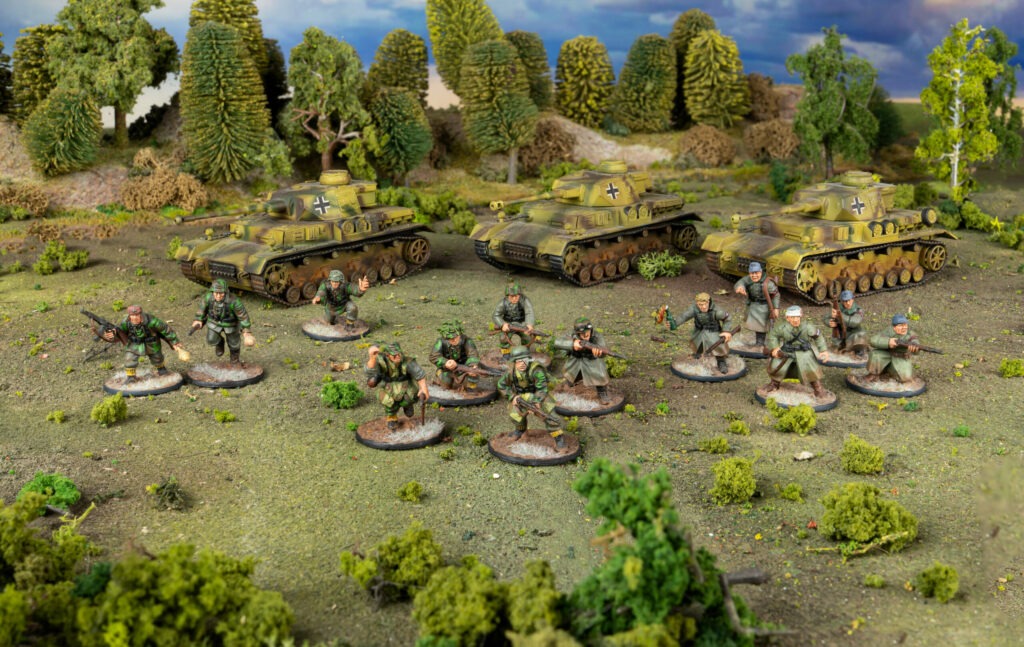
The first thing that comes to mind is the detachment between historical reality and the practice of a hobby. Choosing the German nation in Bolt Action does not make you nostalgic for the Third Reich. You have simply analyzed the game’s “meta.” The German gameplay options correspond to what you find most interesting in your hobby.
Player perception in public and private spaces
I spoke with the Bolt Action community about their choice of nations. They didn’t seem to notice negative comments from their inner circles. This is reassuring: those close to the players don’t make lazy shortcuts. The link between the choice of a nation and a player’s supposed ideology is not established.
However, what about people outside the hobby? Depending on the social or political environment, stating that you play an SS or Soviet army can lead to a form of “guilt by association.” I have met players who are uncomfortable with Bolt Action. Their argument: the theme of the wargame bothers them because of its proximity to real events.
I think this is an understandable perspective. The subject touches on real, past events that—depending on one’s social background, personal culture, or political convictions—can carry a heavy weight that blocks a player. In such cases, it is indeed simpler to turn toward fantasy games, even if those universes are often tinged with more or less extremist politics, as they remain in the realm of pure fiction.
The ethical responsibility of the wargamer
To play a WWII wargame is to accept the handling of historical material loaded with tragedy. Regardless of the side chosen, we are staging men plunged into extreme violence. While we obviously cannot place the ideologies of different regimes on the same moral plane—the Nazi extermination project remaining a unique horror in history—the fact remains that, on the ground, war is a butchery that spares no conscience.
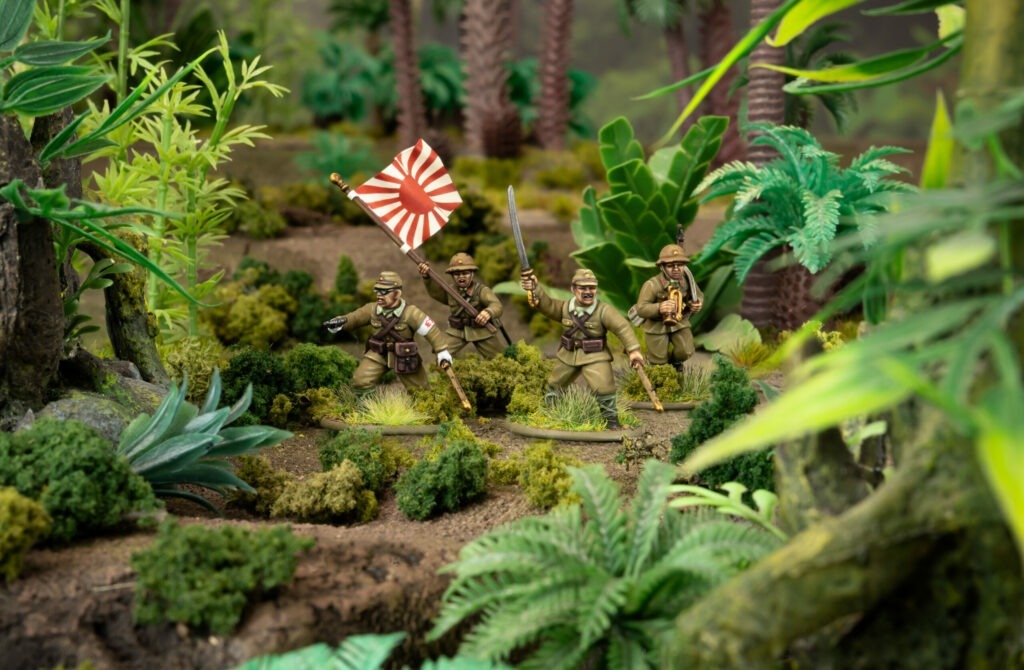
As players, our responsibility is to never turn this hobby into blind glorification. Practicing Bolt Action is also about remembering that behind the strategy and the dice, there was a brutal human reality. Perhaps that is where the greatest virtue of the historical wargame lies: forcing us to look History in the face, with humility and respect for those who endured it.
Fiction as an alternative to historical unease
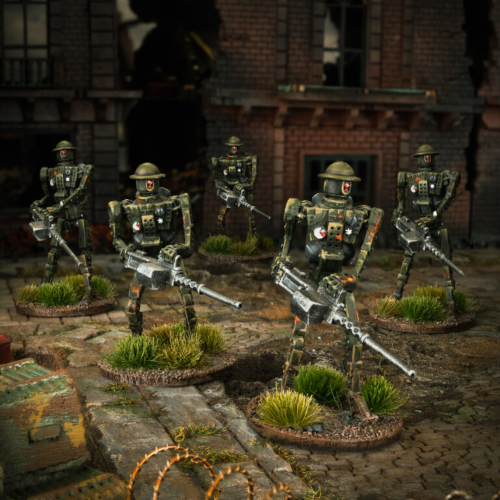
Some games, notably A Song of Ice and Fire, offer miniature ranges that—while set in a fantasy universe—rely on a certain historical reality for some factions. There is, for certain universes, a parallel that can be drawn between historical periods and fantasy games. This is also the case for Trench Crusade, which offers a nightmarish, fantasy “alt-history” of WWI where the Crusades never ended.
What we can deduce is that the line between fiction and history is thin, and History feeds fiction.
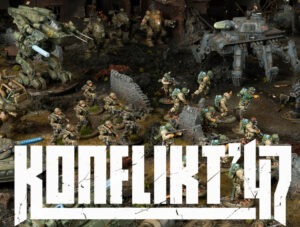
The creators of these games offer reinterpretations and modifications of History to play with it, providing original and exciting content. I also see that Konflikt’47 exploits a fantasy alt-history set after WWII, proposing a universe where historical reality fuels fiction.
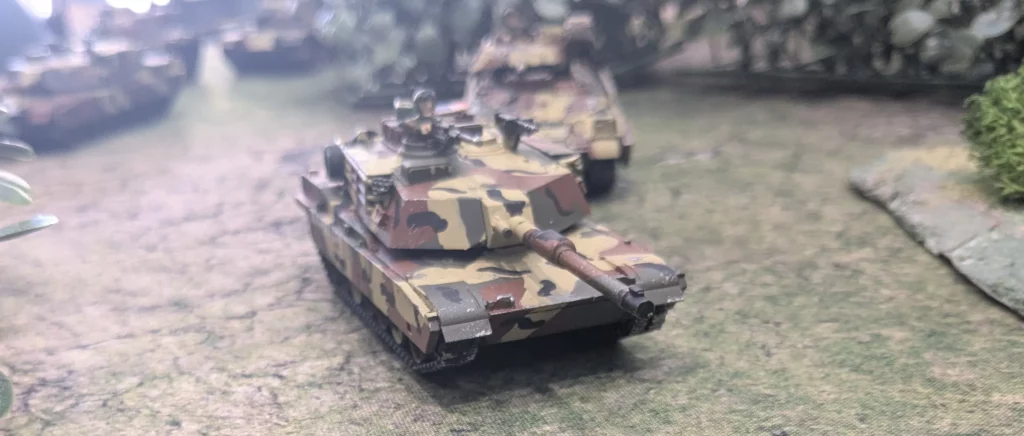
In terms of “What If” scenarios, Team Yankee offers 1/100th scale miniatures in a modern context (mid-80s) and asks: what if the USSR had attacked Western Europe and NATO?
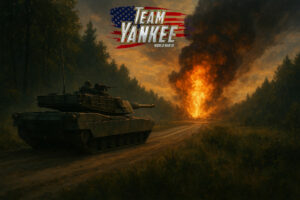
Once again, we are playing with a History that, in the strict context of the game, never happened. But the creators’ effort was to build a context that allows for conflict within a framework that could potentially have been real.
To go further: exploring wargaming and History
A video presentation of Pillage on the Noodle Wargames channel can be found here.
A battle report for Pillage, featuring Vikings vs. Irish, is available here.
Read my introductory article on Bolt Action here.
Acknowledgments
I would like to thank the two French wargaming communities I met on Discord: the Pillage community and the Bolt Action community. Thank you for the feedback you provided, which helped me write this article—a project I have been passionate about for several months.
Noodle, thank you for the magnificent photos of your game, Pillage. They highlight the incredible care and attention to detail you put into its creation. Through your project, you demonstrate that historical research can result in a game that is both deeply engaging and historically grounded.
Written by :

Maurice, Bolt Action editor
I have been passionate about imaginative worlds since childhood, between toy soldiers and role-playing games. In the 90s, I delved into wargames like Squad Leader and Warhammer 40K. Today, I spend my time painting miniatures, working on my own game, and playing Bolt Action, my current favorite wargame.
 Chat with Maurice
  Buy him a coffee
 Explore our coverage by game

Take up the quill — write for Critical Hit
Put your favourite miniature game in the spotlight with an article on Critical Hit. Share your passion, spark excitement around it, and help grow its player base. 💪🏻